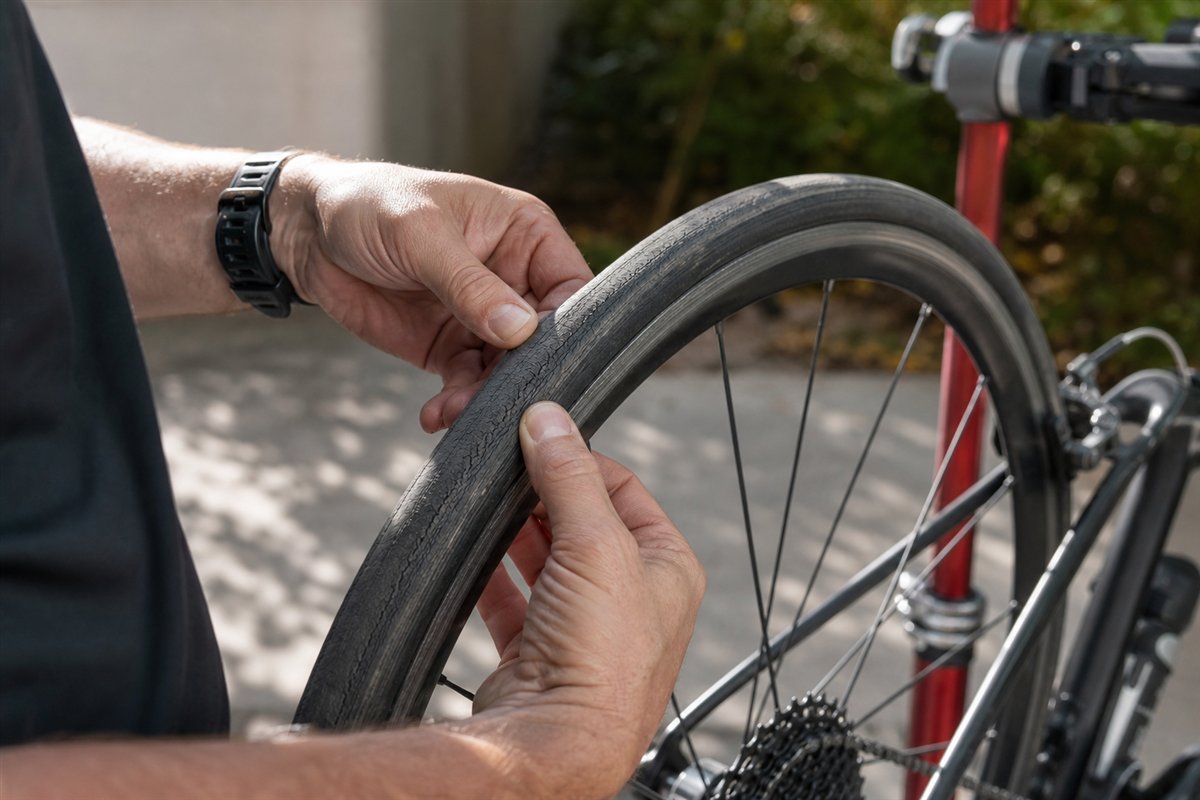
Shallow surface checking can appear as rubber ages, but deep, spreading cracks; visible fabric; a bulge; or a sidewall that feels deformed are reasons not to ride. Deflate the tire and arrange replacement or professional inspection.
Inspect under good light
Check both sides of the tire around the full circumference. Gently flex only a deflated tire enough to see whether a line is superficial or opens into a deeper split. Look for pale casing threads, cuts, abrasion from a brake pad, and damage close to the bead.
Why sidewalls deteriorate
UV exposure, ozone, heat, long storage, underinflation, repeated casing flex, harsh cleaners, and normal age can all contribute. A tire can age even when tread depth remains.
Replace rather than disguise
Do not use glue, sealant, tape, or a tube patch to restore a cracked tire casing. These do not rebuild structural threads. Keep a questionable tire off the road until it is assessed.
For a complete decision, read when to replace bike tires and how to inspect a bicycle tire.
Continue the topic
More tire care guides
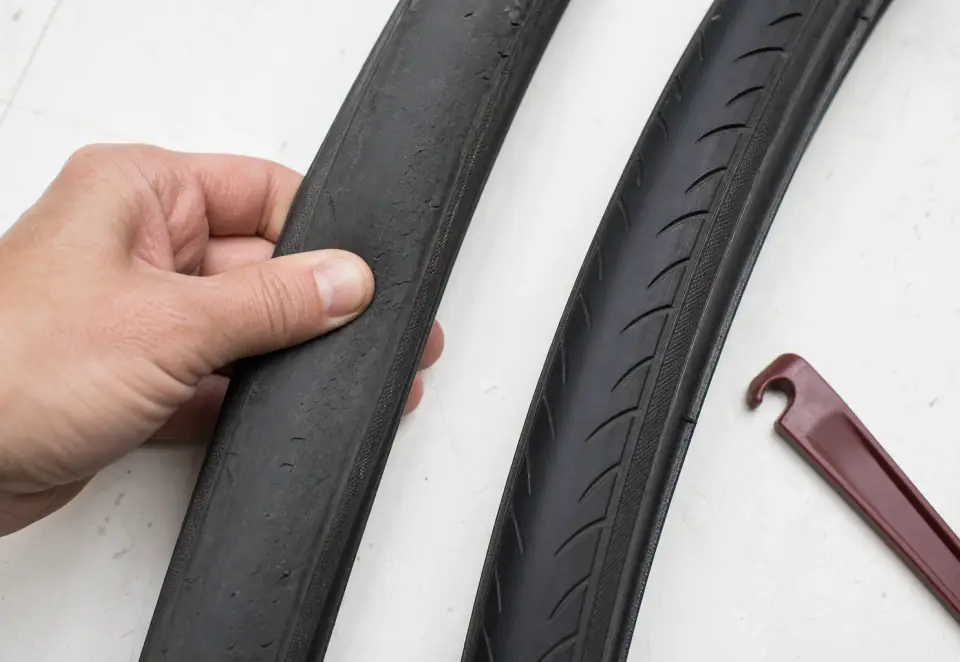 Bike Tire Wear Signs: What the Rubber Is Telling You
 When to Replace Bike Tires: Seven Clear Signs
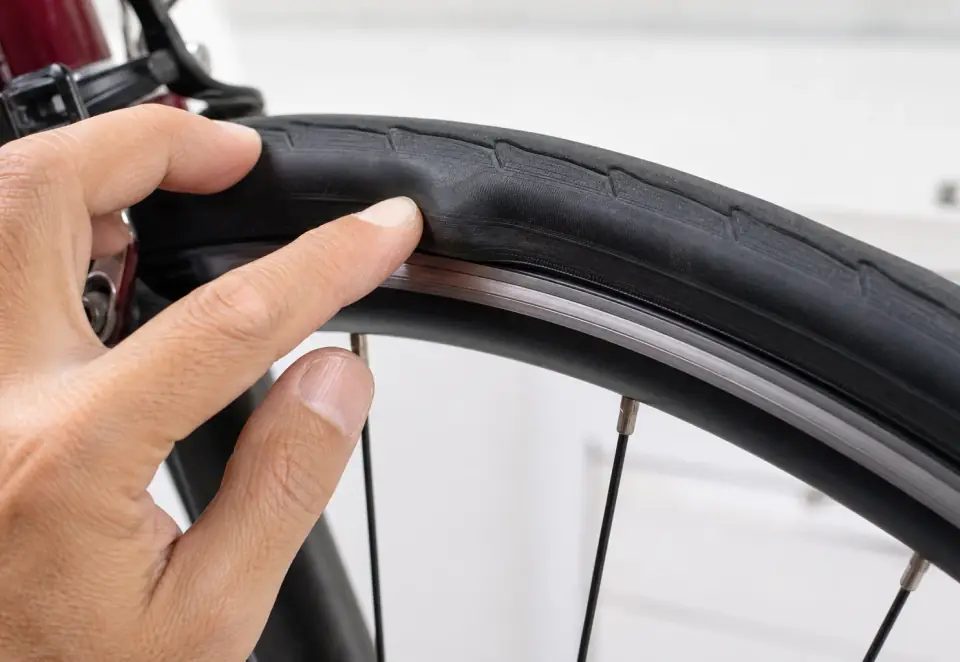 Bike Tire Bulge: Why You Should Stop Riding
Watch the technique
When Should You Replace Your Bike's Tyres?
Video by GCN Tech · Watch on YouTube