Where to start
Use the bicycle manufacturer’s manual as the primary source. Check tires, brakes, wheels, drivetrain, battery mounting, visible wiring, charger condition, and displayed error messages without opening sealed electrical components.
5 focused guides
An e-bike combines ordinary bicycle wear with a battery, motor, wiring, controls, and manufacturer-specific software. The mechanical parts often wear faster because the bike is heavier and carries more torque.
Use the bicycle manufacturer’s manual as the primary source. Check tires, brakes, wheels, drivetrain, battery mounting, visible wiring, charger condition, and displayed error messages without opening sealed electrical components.
Stop using a battery that is swollen, cracked, unusually hot, leaking, giving off an odor, or damaged by impact or water. Move away from combustible material only when it is safe to do so and contact the manufacturer or an authorized service provider.
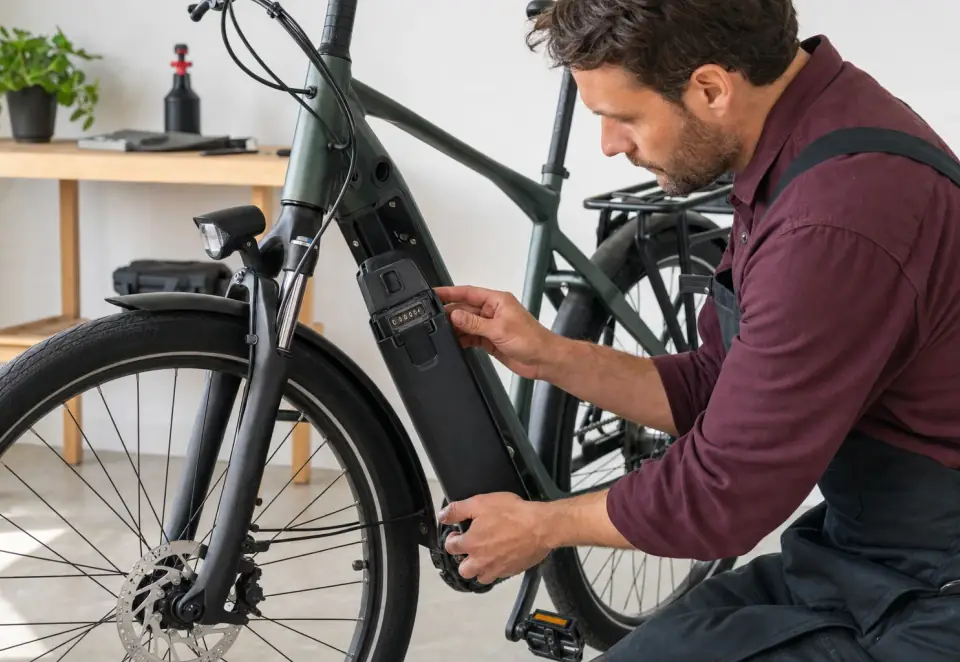
Safe habits for charging, storing, transporting, and inspecting an e-bike battery.
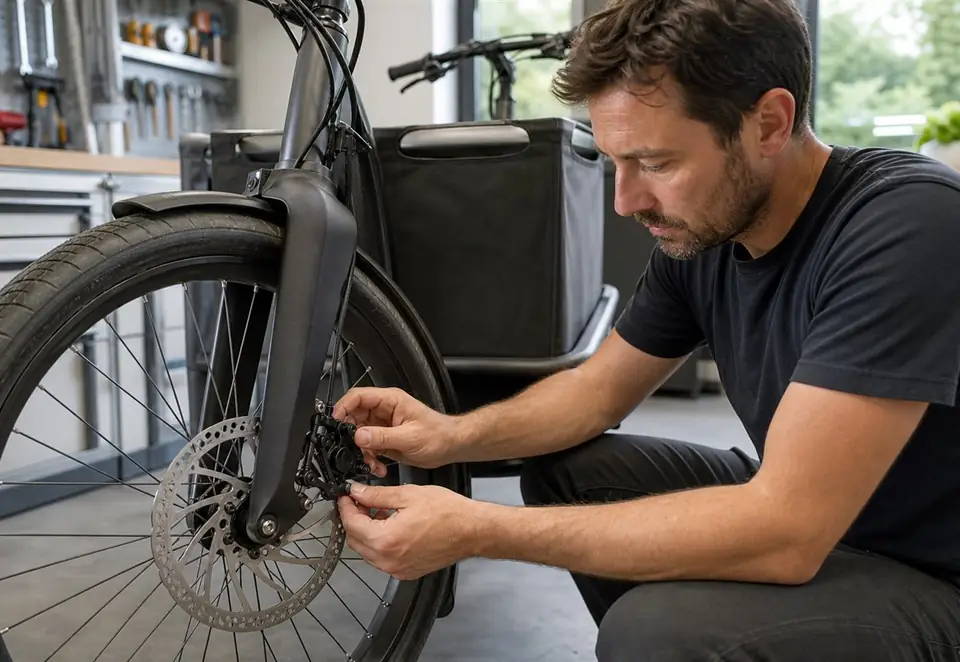
Brake checks for the added weight, speed, cargo, and repeated stopping loads of many e-bikes.
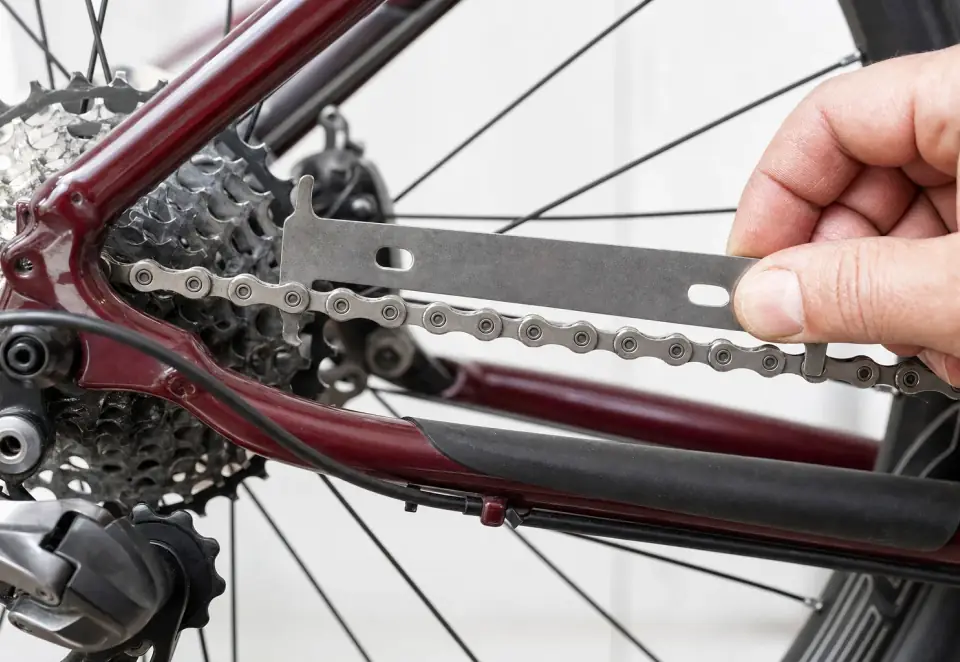
Why motor load can make consistent chain measurement more valuable than a fixed mileage rule.
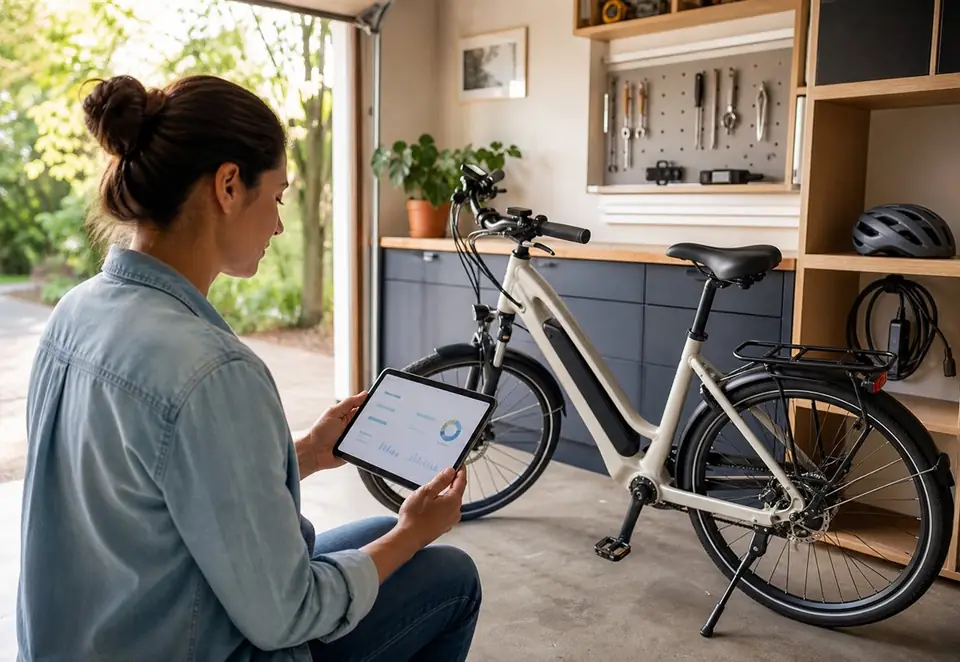
A calm maintenance rhythm for the bicycle parts and electrical system of an e-bike.
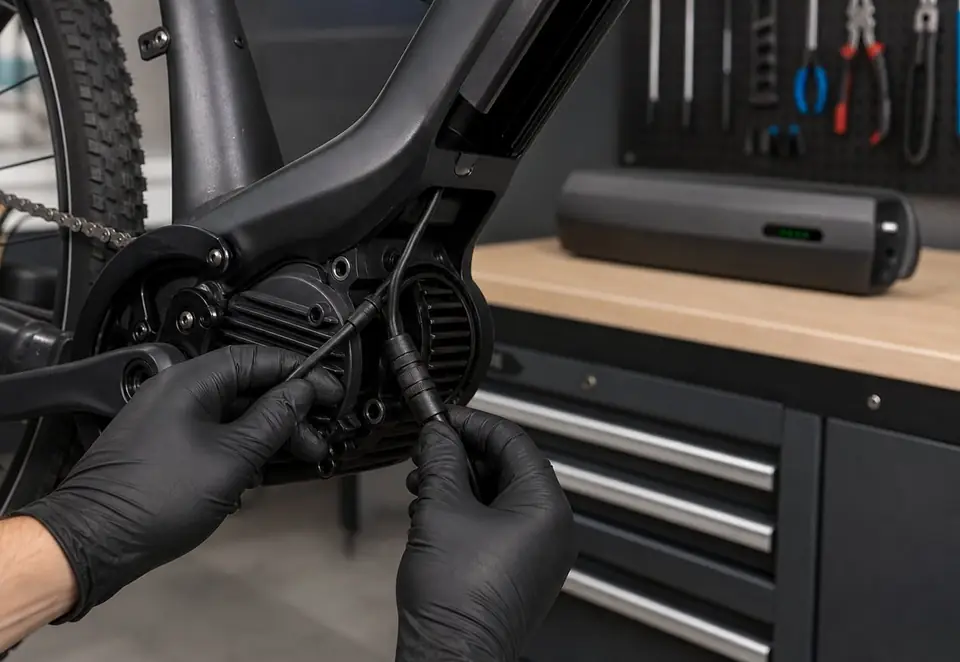
The bicycle checks that stay the same—and the electrical boundaries that are different.