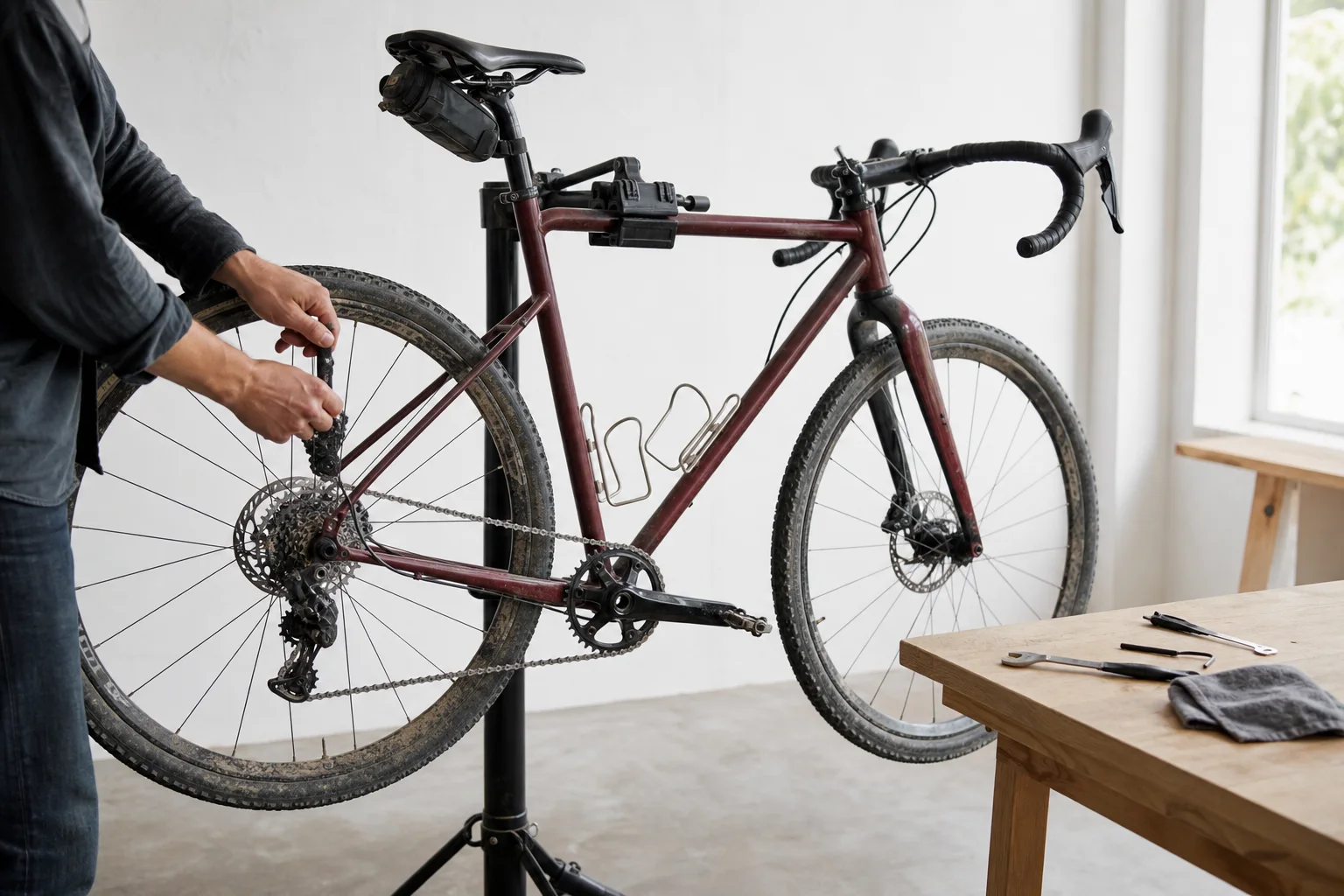
Bike maintenance is the habit of checking safety-critical parts, cleaning enough to inspect them, replacing wear items before they damage other components, and following manufacturer service requirements. Start with tires, wheels, brakes, controls, and the drivetrain before every ride.
The five systems that matter most
Tires and wheels
Maintain suitable pressure, inspect the casing, and confirm wheels are secure. Stop for bulges, exposed casing, damaged beads, loose axles, or major rim damage.
Brakes
Each brake should engage firmly and predictably. Check pad material and braking surfaces without contaminating them. Weakness, leaks, damaged hoses, or metal-on-metal contact need service.
Steering and controls
Handlebars, stem, headset, saddle, and controls should not shift unexpectedly. Steering play or suspected fork damage is a stop-riding condition.
Chain and drivetrain
Keep the chain reasonably clean, lubricate for the conditions, and measure wear. Investigate skipping, damaged links, and shifting changes rather than masking them with more lubricant.
Frame and contact points
Clean enough to see cracks, dents, corrosion, and loose accessories. Do not attempt to judge structural safety from a photo alone.
Build a sustainable rhythm
Use a quick pre-ride check, a weekly condition review, a monthly checklist, and component-specific service intervals. Record work so maintenance is based on history, not memory.
Know the boundary
Qualified service is appropriate for structural concerns, hydraulic or electrical problems, suspension work, wheel damage, torque-critical assemblies, and any repair beyond your tools or experience. A good maintenance plan makes that boundary clearer—not smaller.
Continue the topic
More maintenance planning guides
 Bike Service Checklist: What to Ask a Shop
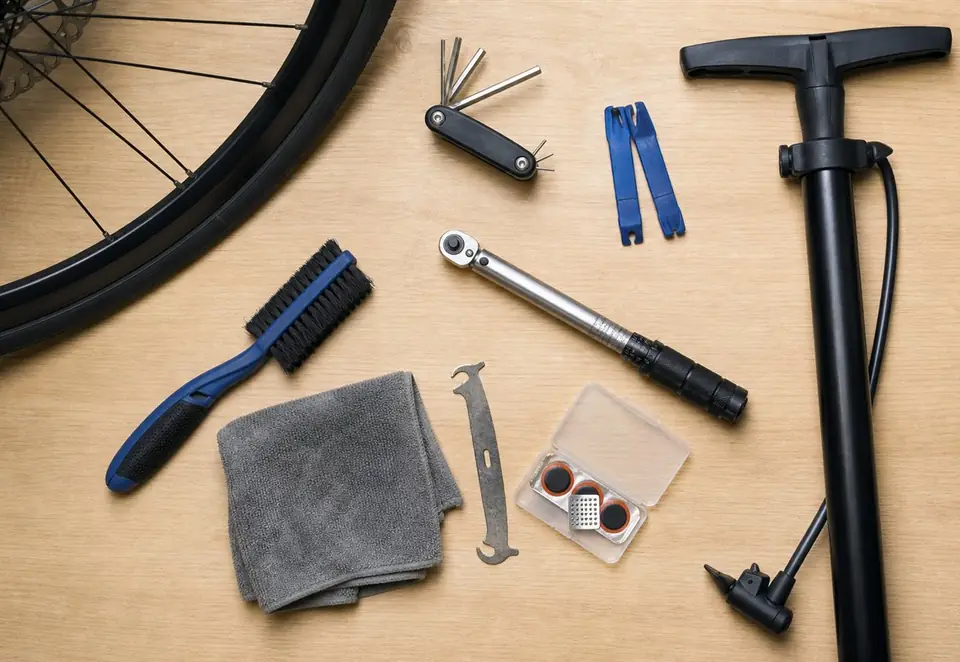 Bike Maintenance Checklist: Tools, Tasks, and Timing
 Bike Maintenance Schedule by Use and Conditions
Watch the technique
What To Expect When Servicing A Bike
Video by Global Cycling Network · Watch on YouTube