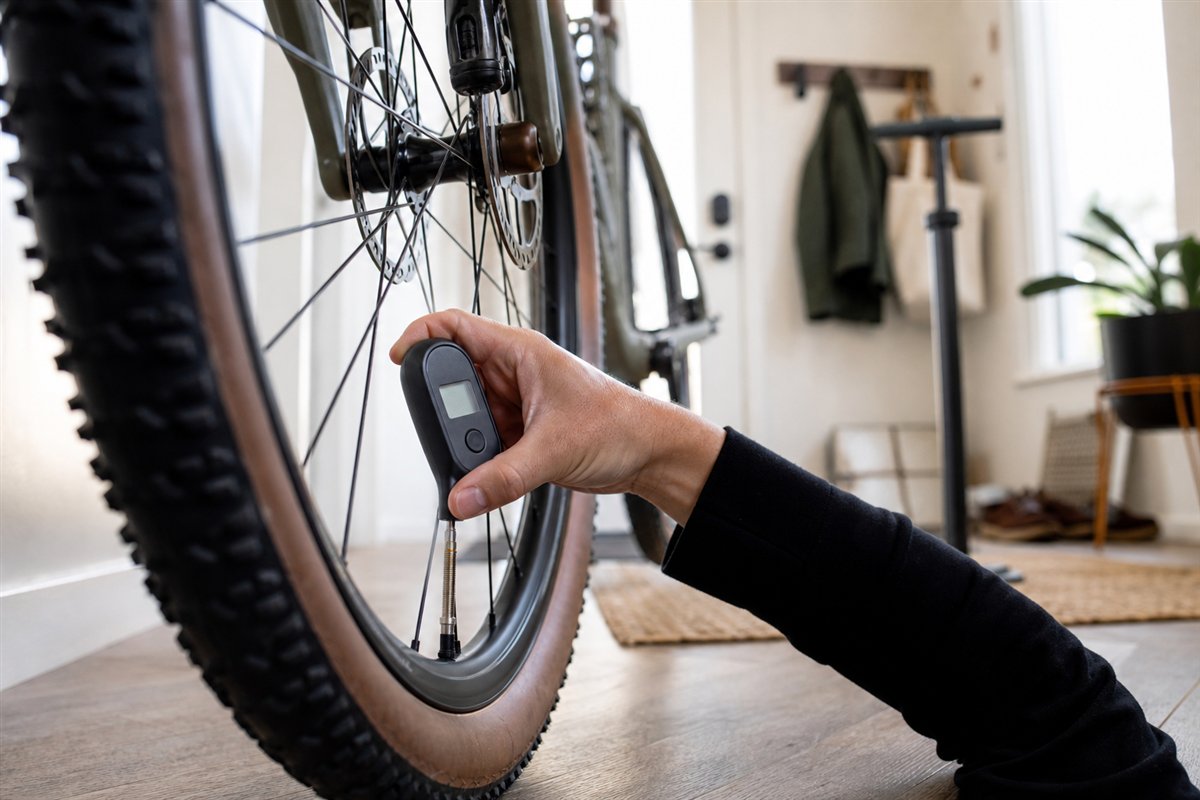
A bike tire inspection should cover pressure, tread, both sidewalls, bead seating, embedded debris, and the rim. Check before longer rides, after a hard impact, and whenever pressure loss or handling changes.
Start with the whole tire
Rotate each wheel slowly under good light. Look for a bulge, cut, exposed thread, deep crack, torn tread, or object embedded in the rubber. Check both sidewalls, including the less visible side near the drivetrain.
Check seating and pressure
The molded line above the rim should remain a consistent distance from the rim edge. Use a reliable gauge and a pressure suitable for the tire, rim, load, and surface—within both manufacturers’ limits.
Consider the rim and valve
Look for dents, cracks, sharp edges, a leaning valve, damaged tape, or sealant leaks. Pressure loss can come from the tube, valve, tape, tire, or rim; adding air repeatedly is not a diagnosis.
Stop riding for a bulge, exposed casing, bead damage, serious rim damage, or rapid unexplained pressure loss. Continue with tire wear signs.
Continue the topic
More tire care guides
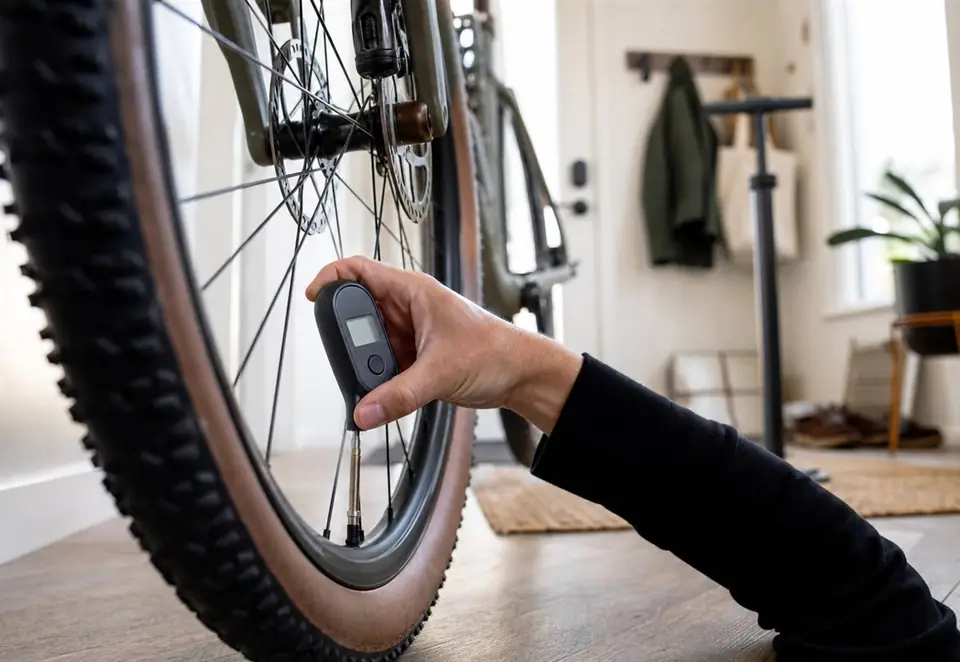 Bike Tire Pressure: How to Find Your Ideal PSI
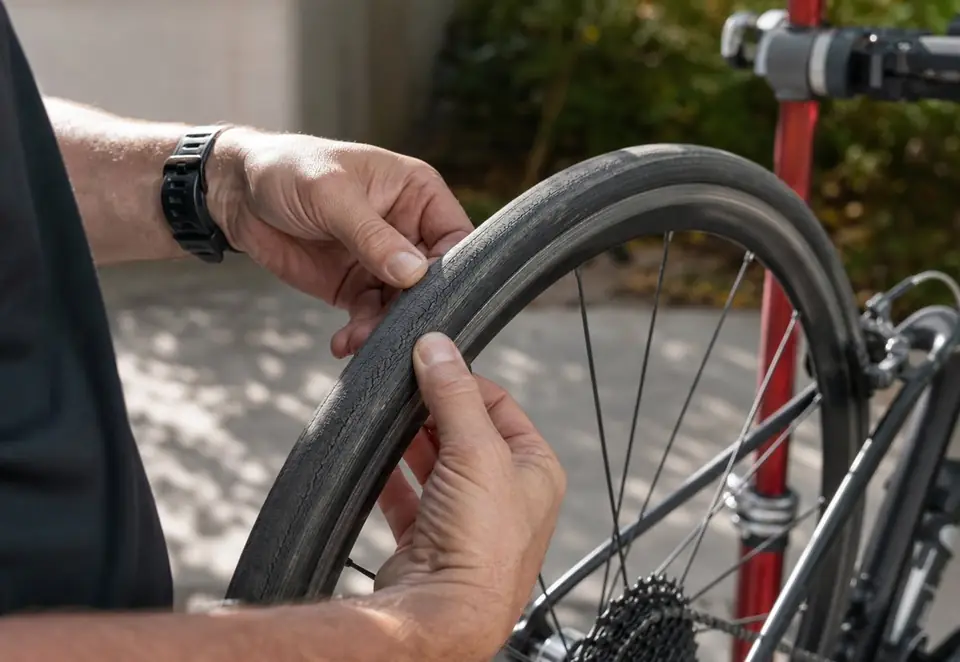 Bike Tire Sidewall Cracks: When They Are Unsafe
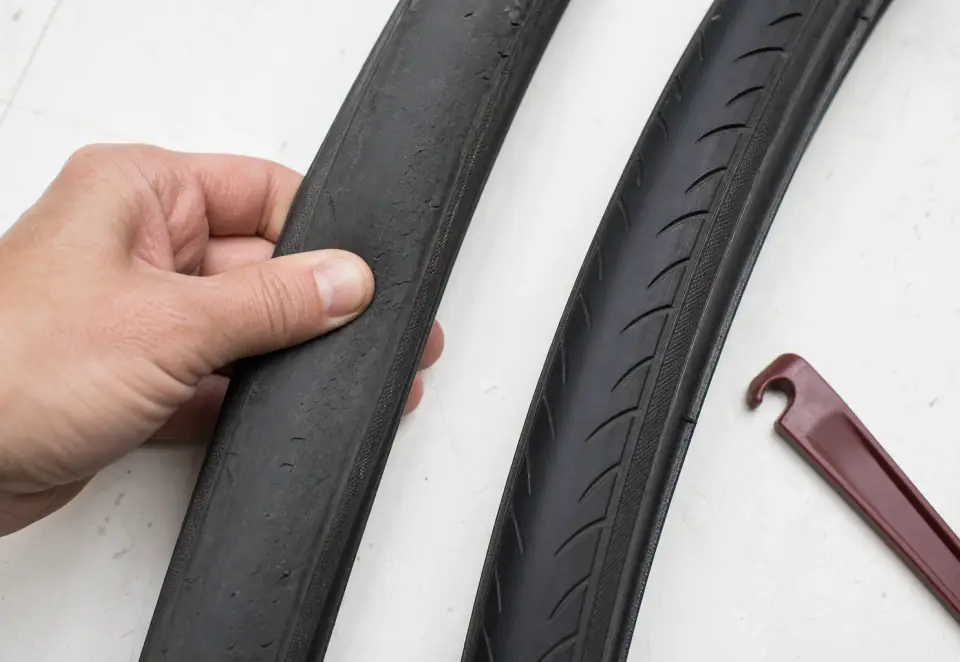 Bike Tire Wear Signs: What the Rubber Is Telling You
Watch the technique
When Should You Replace Your Bike's Tyres?
Video by GCN Tech · Watch on YouTube