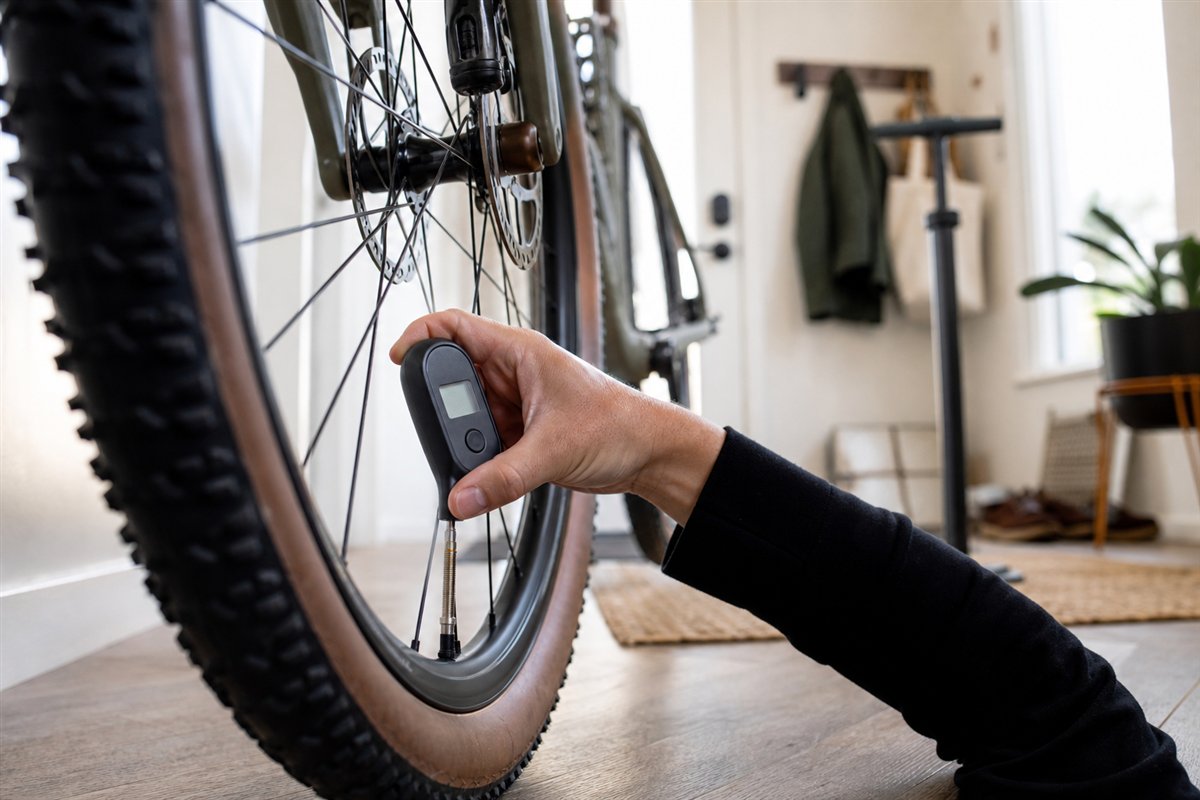
The right bike tire pressure is the one matched to your weight, your tire width, and where you ride. A number printed on the sidewall is only a range, and the pressure that feels fast and safe for a 140 lb rider on 25mm road tires is wrong for a 210 lb rider on 45mm gravel tires. If you want an exact figure, our bike tire pressure calculator turns these inputs into front and rear PSI in seconds. This guide explains what those numbers mean so you can adjust them with confidence.
The three factors that actually decide pressure
- Total weight. Rider, bike, and gear together are the single biggest factor. More load needs more pressure to support the tire and stop the rim from bottoming out on bumps.
- Tire width. A wider tire holds more air volume, so it reaches the same support at a lower pressure. This is why a 45mm gravel tire runs at half the pressure of a 25mm road tire.
- Surface and conditions. Smooth pavement rewards slightly higher pressure for lower rolling resistance, while rough, loose, or wet surfaces reward lower pressure for grip and control.
Front and rear are not the same. The rear tire carries roughly 60% of your combined weight, so it should run a few psi higher than the front.
Recommended tire pressure by bike type
Use this chart as a starting point for an average 165 lb (75 kg) rider, then adjust up if you are heavier and down if you are lighter.
| Bike type | Typical tire width | Starting pressure |
|---|---|---|
| Road | 23–28 mm | 65–100 psi |
| Gravel | 35–45 mm | 30–45 psi |
| Mountain (XC/Trail) | 2.1–2.5“ | 20–30 psi |
| Fat bike | 4–5“ | 5–15 psi |
Never exceed the maximum pressure printed on the tire sidewall, and remember that hookless road rims are capped at 73 psi (5 bar) regardless of tire width.
Adjusting for real-world conditions
- Tubeless setups can safely run 5 to 10 psi lower than tubed tires because there is no inner tube to pinch-flat. This is why tubeless is standard for gravel and mountain biking.
- Wet or loose terrain favors dropping a few psi to enlarge the contact patch and improve grip.
- Temperature changes pressure by about 2% per 10°F (5.5°C). Check pressure at the temperature you will actually ride in, not in a warm garage.
Common tire pressure mistakes
- Running the maximum sidewall pressure by default, which makes the ride harsh and slower on real roads.
- Using the same pressure front and rear despite the rear carrying more load.
- Ignoring tire width and copying a friend’s number when their setup is different.
- Forgetting that tires leak down between rides, so a pressure set last week is not the pressure you have today.
Once your pressure is dialed in, keep an eye on the tire itself. Knowing when to replace bike tires and how to read bike tire wear signs matters just as much as inflation, because a worn or damaged tire is unsafe at any pressure.
Frequently asked questions
What is the ideal bike tire pressure?
There is no single ideal pressure. It is set by your total weight, tire width, and surface. As a starting range, road tires run 65 to 100 psi, gravel 30 to 45 psi, mountain bike 20 to 30 psi, and fat bikes 5 to 15 psi, with heavier riders toward the top of each range.
How do I calculate bike tire pressure by weight?
Total system weight, meaning rider plus bike plus gear, is the biggest factor, and the rear tire carries about 60% of it, so it needs more pressure than the front. Rather than guess, enter your weight, bike type, and tire width into a tire pressure calculator to get separate front and rear figures.
Is lower or higher bike tire pressure better?
Lower pressure adds grip and comfort but risks pinch flats and vague handling. Higher pressure lowers rolling resistance on smooth roads but is harsher and can lose traction. The fastest real-world pressure is the lowest one that still protects the rim and feels stable for your terrain.
How often should I check tire pressure?
Check before every ride for road bikes and at least weekly for wider tires. Tubes and tubeless tires lose several psi per week, and pressure also drops about 2% for every 10°F fall in temperature, so a tire set in a warm garage reads lower on a cold morning.
Continue the topic
More tire care guides
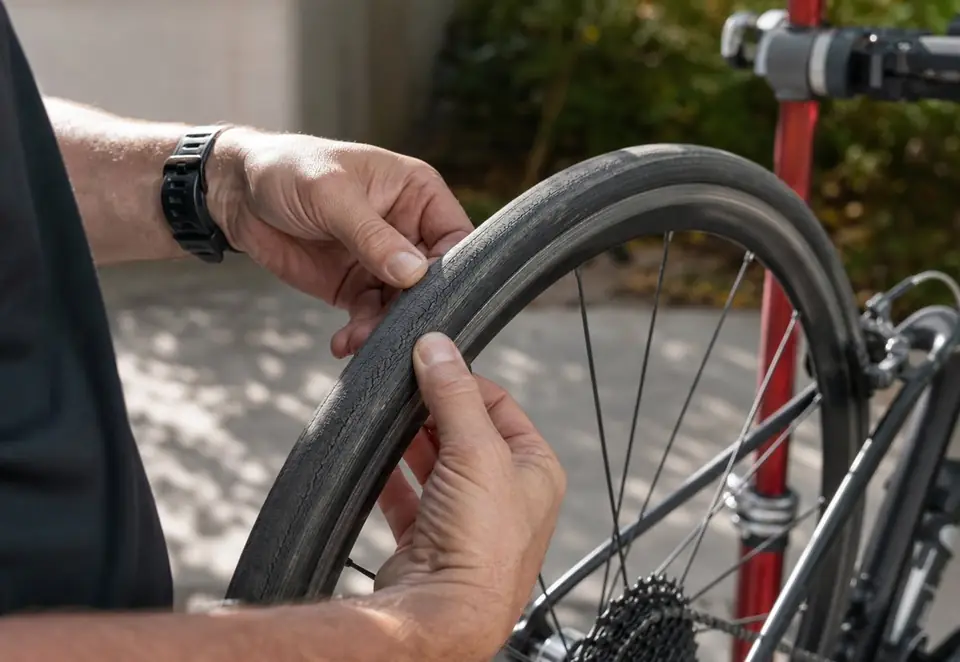 Bike Tire Sidewall Cracks: When They Are Unsafe
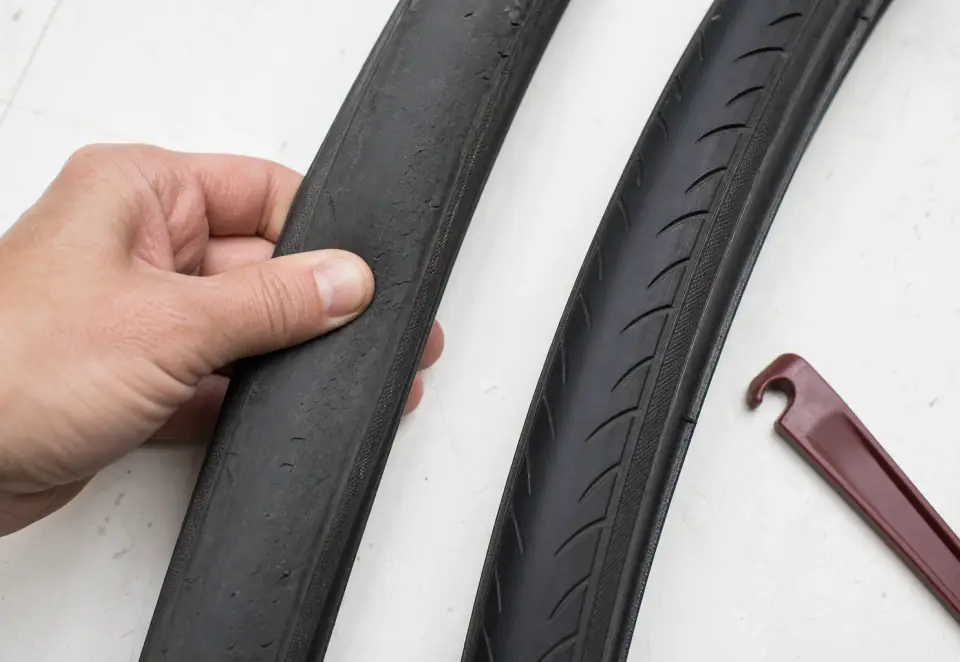 Bike Tire Wear Signs: What the Rubber Is Telling You
 When to Replace Bike Tires: Seven Clear Signs
Watch the technique
How To Find Your Perfect Tyre Pressures | Bike Tyre Pressure Explained
Video by Global Cycling Network · Watch on YouTube