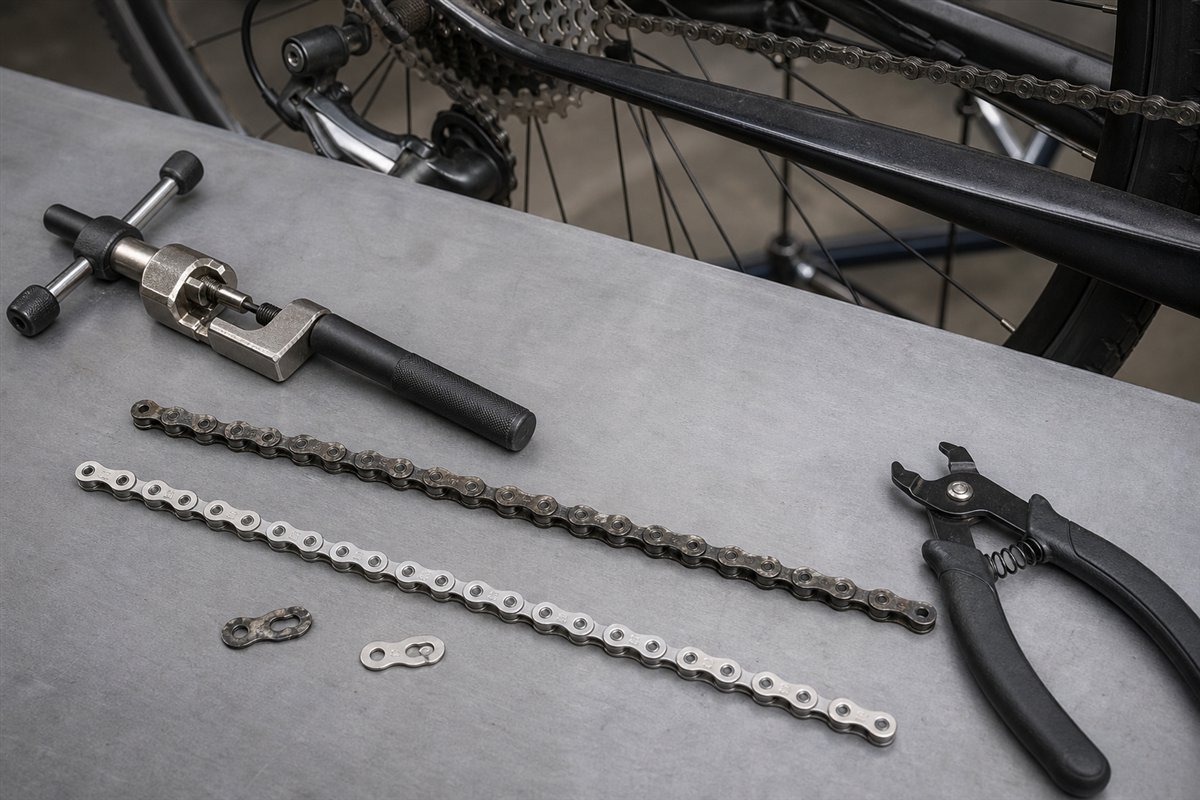
Replace a bicycle chain when a compatible chain-wear tool reaches the limit specified for your drivetrain, or when links are cracked, badly corroded, twisted, or remain stiff after correct cleaning. Replacing it on time can reduce wear on the cassette and chainrings.
Why chains appear to stretch
The metal side plates do not normally become longer. Wear develops around pins and rollers, increasing the effective pitch from one link to the next. That accumulated change is often called chain stretch.
Measure rather than guess
Use a gauge designed for the chain type and follow its instructions. Different drivetrains and tools use different thresholds, so a generic number can mislead. Check several clean sections and avoid forcing the tool into place.
Mileage is only context. Grit, power, shifting habits, weather, lubrication, and cleaning all change the rate of wear.
Replace immediately for damage
A cracked plate, protruding pin, twisted link, severe corrosion, or link that will not articulate normally requires attention even if the wear reading is acceptable. Do not continue riding a chain that may separate under load.
After installing a new chain, skipping can indicate that the cassette has worn to match the old chain. A mechanic can assess the complete system. Learn how to check chain wear and why a chain skips under load.
Continue the topic
More drivetrain care guides
 Bike Chain Making Noise: A Diagnostic Guide
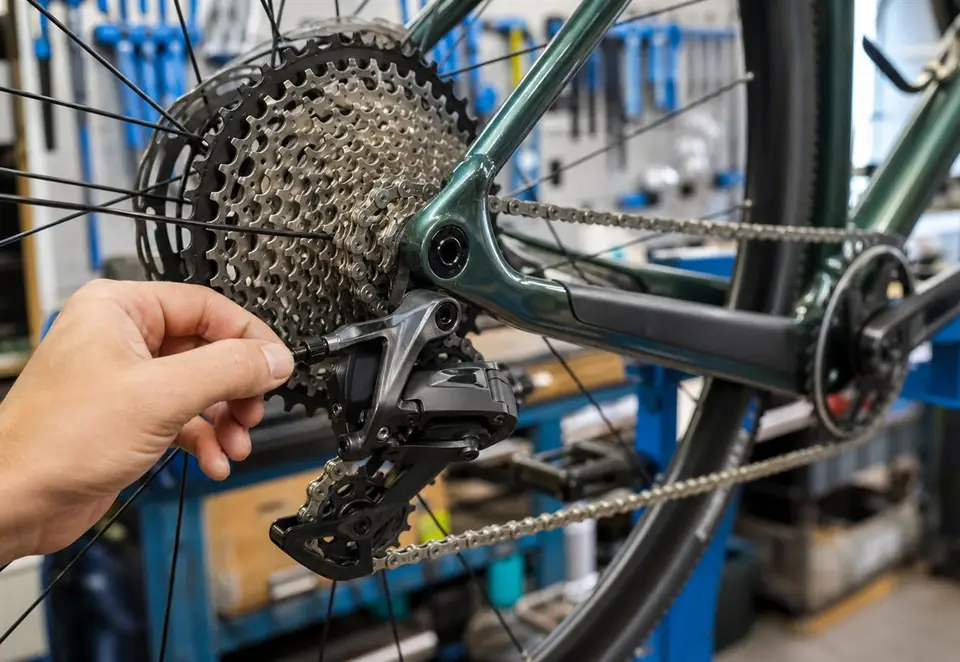 Bike Chain Skipping Under Load: Likely Causes
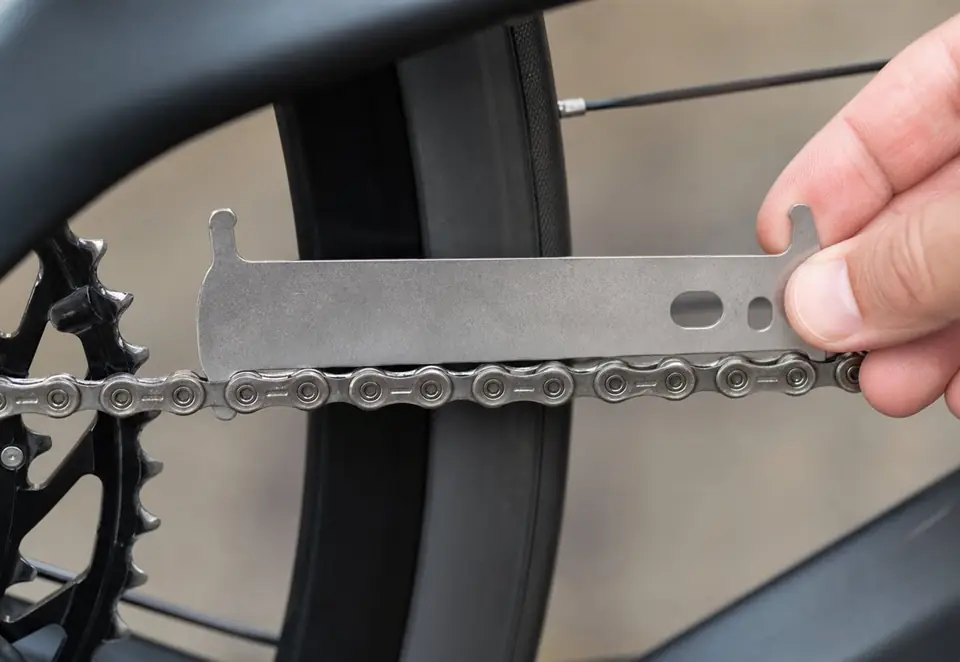 Bike Chain Wear: How to Check It Correctly
Watch the technique
How To Change A Chain
Video by Global Cycling Network · Watch on YouTube