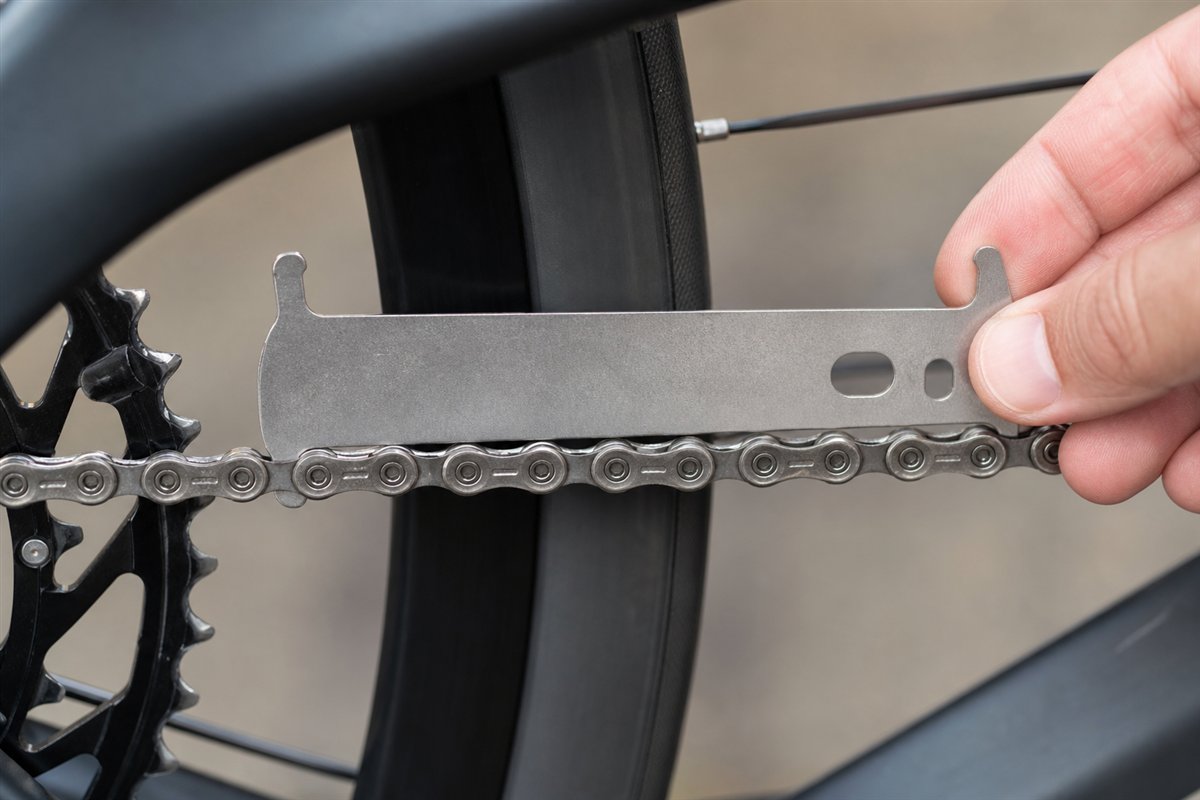
The reliable way to check bike chain wear is with a gauge that is compatible with your chain and interpreted using the drivetrain manufacturer’s limit. Clean the chain, measure several sections, and never force the gauge.
What you are measuring
Wear develops around rollers, pins, and inner plates, increasing the effective distance across multiple links. The result is commonly called stretch, even though the side plates are not simply pulling longer.
A repeatable check
- Clean heavy dirt from the chain.
- Place the bicycle securely with the drivetrain still.
- Use the tool exactly as its instructions describe.
- Test multiple sections to avoid relying on one abnormal link.
- Compare the result with the chain and drivetrain maker’s replacement guidance.
Different tools include roller wear differently and display different thresholds. Do not assume a reading from one design means the same thing on another.
Wear and damage are separate
A chain can pass a wear check but still have a cracked plate, protruding pin, severe corrosion, or stiff link. These require immediate attention. See when to replace a chain and the drivetrain routine.
Frequently asked questions
How do you check bike chain wear?
Use a chain wear gauge on a clean chain. Most modern 11- and 12-speed chains should be replaced at 0.5% wear, while many older 8- to 10-speed chains can run to 0.75%. Mileage estimates cannot replace a direct measurement.
When is a bike chain worn out?
A chain is worn out once a gauge reads past its threshold, commonly 0.5% for modern drivetrains. Replacing it in time protects the far more expensive cassette and chainrings from wearing to match the stretched chain.
Continue the topic
More drivetrain care guides
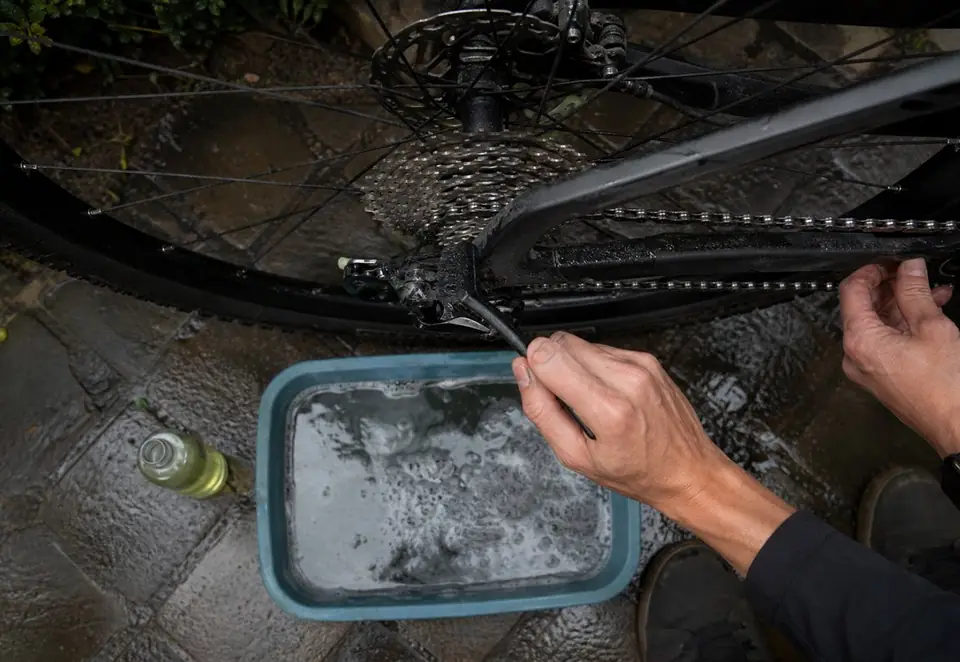 Bike Drivetrain Maintenance: A Practical Routine
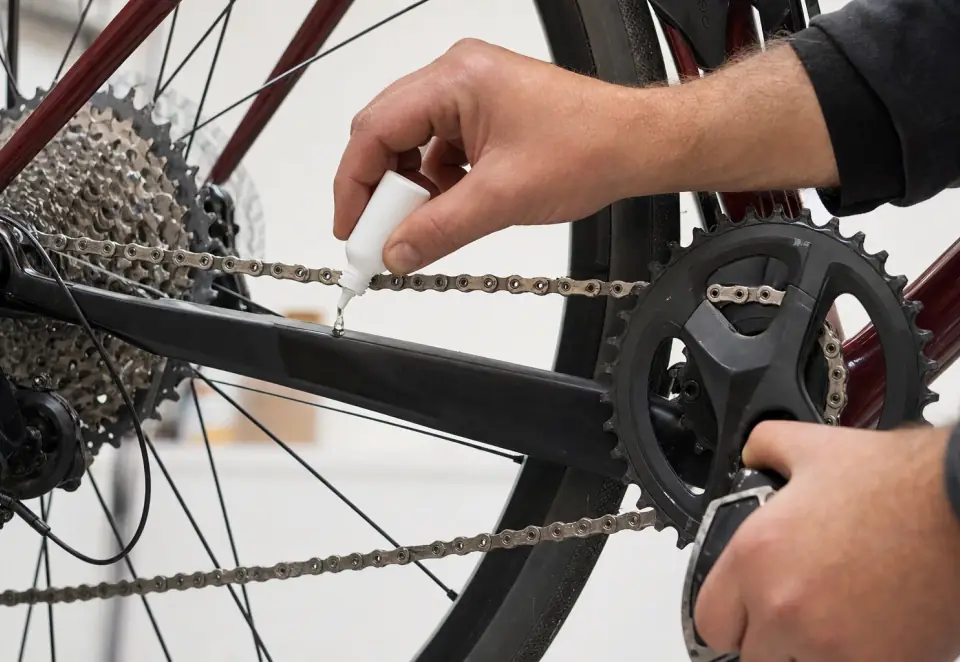 How Often Should You Lube a Bike Chain?
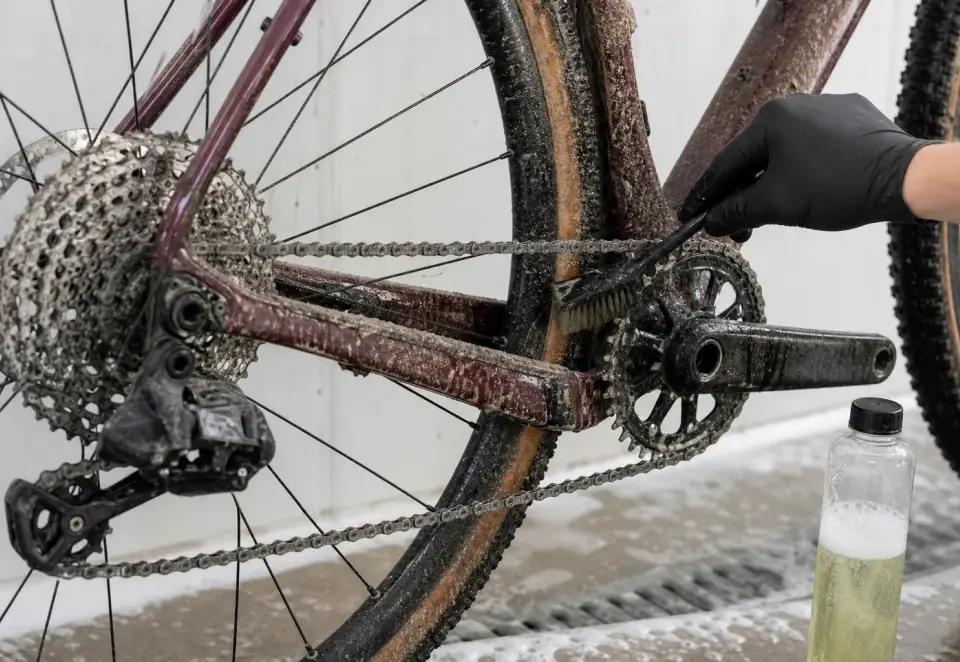 How to Clean a Bike Drivetrain Without Causing Damage
Watch the technique
How To Check Your Mountain Bike Drivetrain For Wear
Video by Global Mountain Bike Network · Watch on YouTube