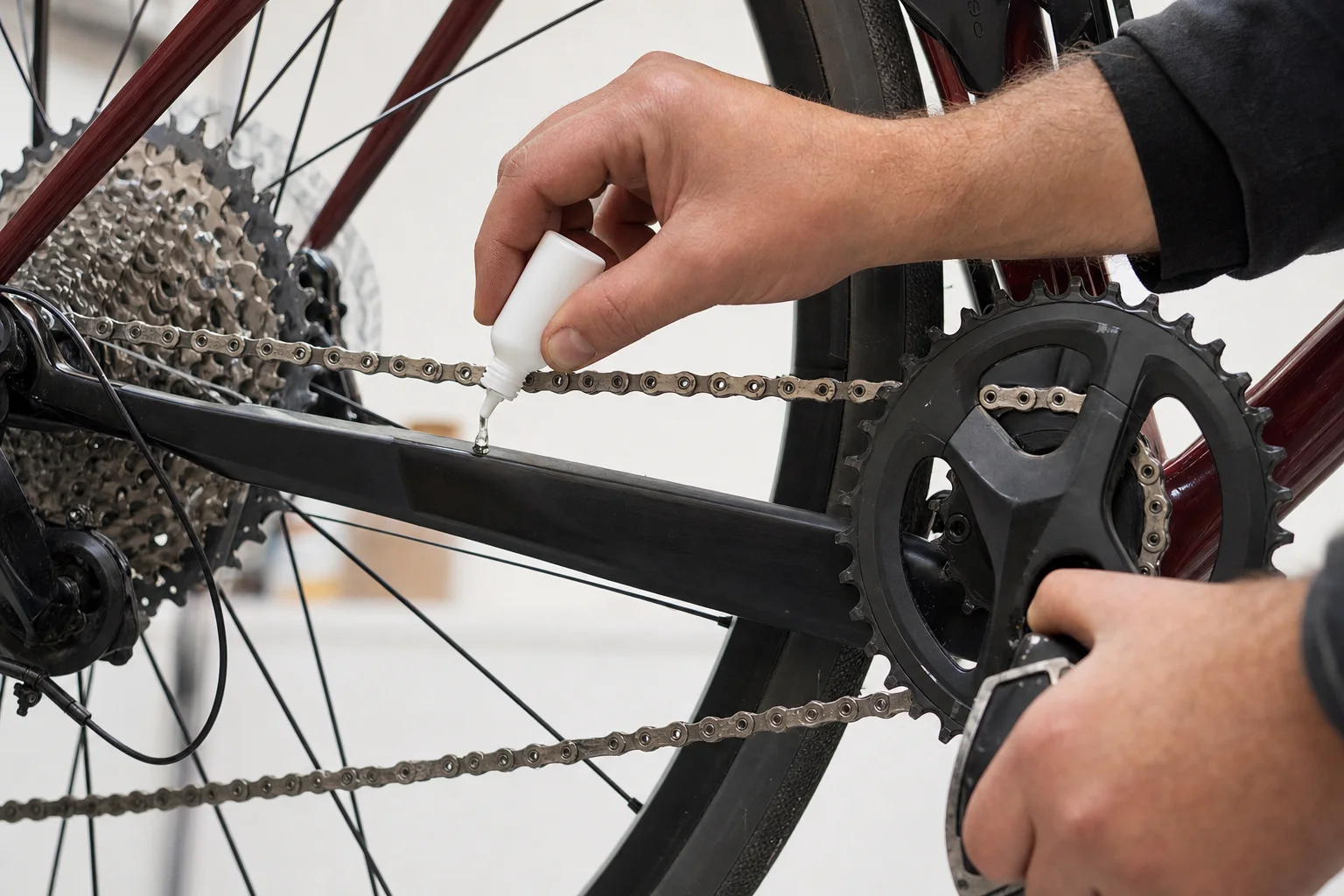
There is no universal mileage interval. Check the chain weekly if you ride often, clean and re-lubricate after sustained rain or gritty rides, and act sooner when the chain sounds dry. Conditions tell you more than the calendar.
Signs the chain needs attention
A dry metallic rasp, visible surface corrosion, stiff links, or rollers that look completely dry are reasons to inspect the drivetrain. Sticky black buildup means clean first; adding lubricant to grit creates an abrasive paste.
Noise can also come from wear or poor adjustment. If correct lubrication does not help, do not keep adding more.
Adjust for your riding
- Dry roads: wipe dust regularly and avoid leaving excess lubricant outside the chain.
- Wet commuting: wipe away water and road grime after wet rides, then re-lubricate as required.
- Gravel: fine grit sticks to surplus lubricant, making the final wipe especially important.
- Mud: clean contamination away rather than layering fresh lubricant over it.
Apply lubricant correctly
- Use a bicycle-chain product suited to your conditions.
- Wipe or clean the chain according to the product instructions.
- Apply a small drop to each roller while turning the crank backward by hand.
- Allow the specified settling or curing time.
- Wipe the chain’s exterior until it no longer looks wet.
Keep all lubricant away from rotors, rim braking tracks, pads, and tire tread. If a braking surface is contaminated, do not ride until it is correctly serviced.
Lubrication does not measure wear. Use our chain wear guide and drivetrain maintenance checklist to complete the routine.
Continue the topic
More drivetrain care guides
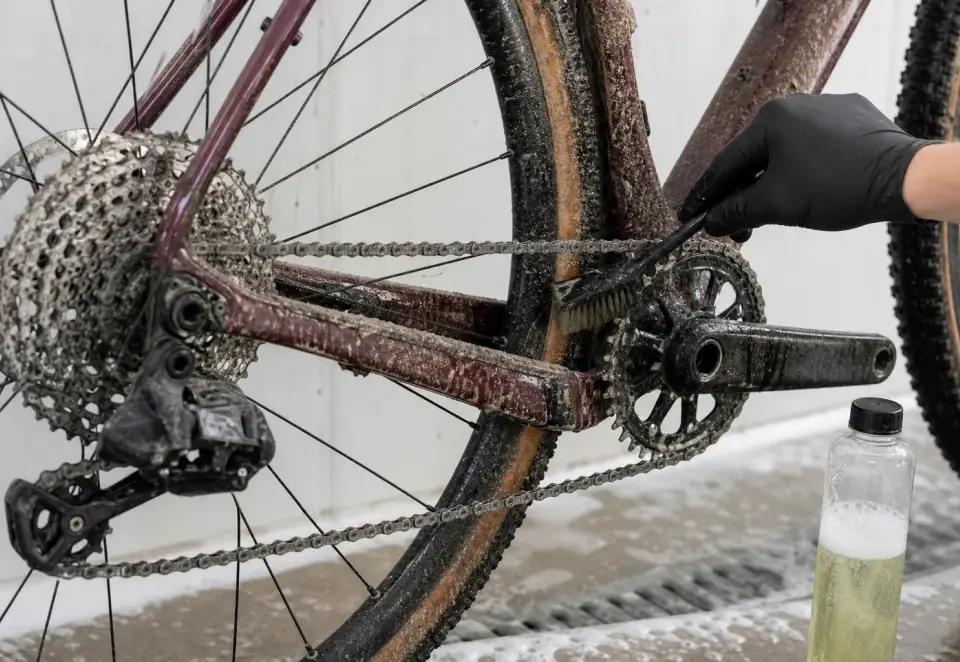 How to Clean a Bike Drivetrain Without Causing Damage
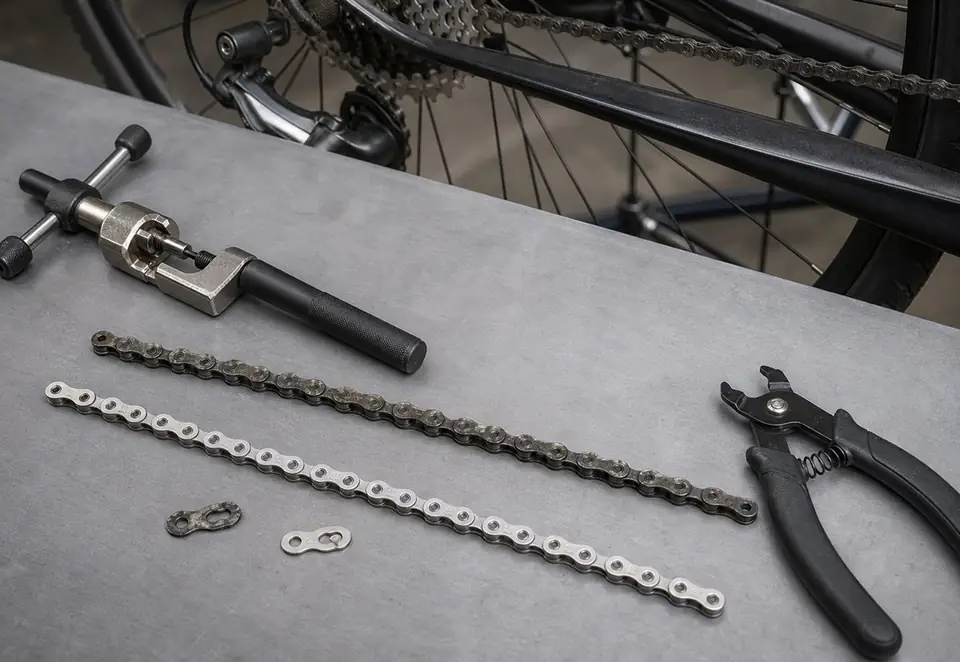 When to Replace a Bike Chain
 Bike Chain Making Noise: A Diagnostic Guide
Watch the technique
CL-1.2 Chain Lube
Video by Park Tool · Watch on YouTube