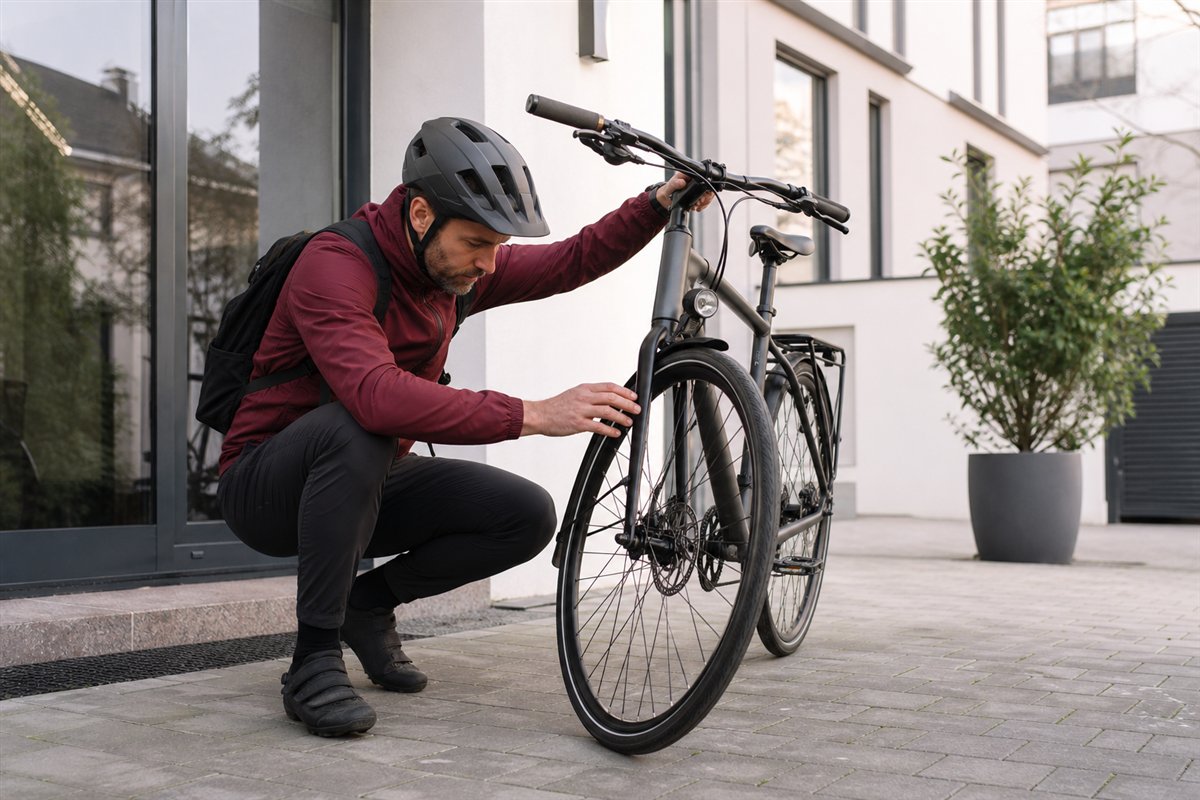
Inspect a used bike in daylight and budget for wear, not just the asking price. Walk away from suspected frame or fork damage, a questionable battery, a missing serial number, or a seller who will not let you perform basic checks. Ordinary consumables are negotiable; structural uncertainty is not.
Confirm identity and fit first
Compare the frame serial number with the seller’s receipt or ownership record where available. Look for removed labels, ground metal, or an explanation that does not make sense. Check local stolen-bike registries before money changes hands.
Make sure the frame size is plausible for you. A cheap bike that cannot be adjusted to a safe, comfortable position is not a bargain. Confirm there is enough saddle-height range and that the reach does not force an extreme stem or seat position.
Read the frame and fork in good light
Wipe dirty areas before judging them. Inspect tube junctions, welds, the underside of the down tube, chainstays, fork crown, dropouts, and areas around suspension pivots. Paint chips are common; cracks, spreading lines from a joint, sharp dents, ripples, crushed carbon, or mismatched alignment need expert assessment.
Turn the handlebar slowly. Steering should move freely without a notch at the center. Hold the front brake and rock the bike gently; a knock can come from headset play, brake-pad movement, or a loose wheel, so identify the source rather than accepting “they all do that.”
Estimate the first service bill
Inspect tire sidewalls and tread, then spin both wheels. A small wobble may be serviceable, but rim damage, loose spokes, rough hub bearings, or a tire bulge changes the risk and cost. Apply each brake separately while stationary. Levers should feel controlled, pads should have usable material, and braking surfaces should be clean and undamaged.
Measure chain wear with a compatible gauge if the seller agrees. A worn chain can imply cassette or chainring wear too. Shift through every gear during a short, safe test ride. Listen for skipping under load, persistent grinding, or a derailleur that approaches the spokes.
Treat e-bike electronics as a separate purchase
Confirm the model, key, charger, battery mount, display, and assistance modes. Use only the system’s approved charger. Look for a cracked case, swelling, corrosion, loose ports, damaged wiring, unusual heat, or error messages. Ask for battery age, storage history, replacement availability, and any diagnostic report. Do not open the battery or buy a visibly damaged pack.
Make the decision on evidence
Photograph wear items and list the likely parts and labor before negotiating. If the bike has uncertain structural damage, weak brakes, a loose wheel, steering problems, or battery damage, do not test ride it. A pre-purchase inspection by an independent bicycle shop is valuable when the bike is expensive, carbon, suspended, or electric.
Continue the topic
More pre-ride checks guides
See every pre-ride checks guide
Watch the technique
How to inspect a used bike before buying
Video by Global Cycling Network · Watch on YouTube