Where to start
Check the wheels and tires, squeeze both brakes, confirm steering and wheel security, turn the cranks, and look for anything loose, leaking, cracked, or newly noisy. Adjust the depth of the check to the ride ahead.
3 focused guides
A pre-ride check is a short scan for meaningful change. It cannot certify a bicycle as safe, but it can catch obvious pressure loss, looseness, brake problems, damage, and unresolved maintenance before speed and traffic raise the consequences.
Check the wheels and tires, squeeze both brakes, confirm steering and wheel security, turn the cranks, and look for anything loose, leaking, cracked, or newly noisy. Adjust the depth of the check to the ride ahead.
Do not start the ride when a critical concern remains unexplained. Structural damage, steering play, weak brakes, damaged tires, loose wheels, and battery damage require resolution before riding.
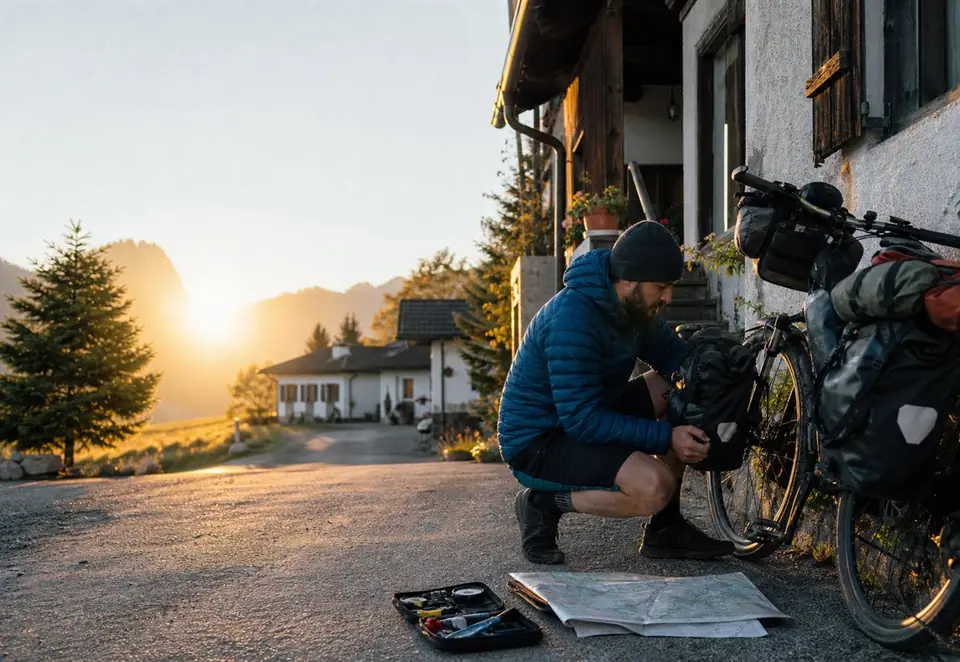
A deeper inspection to complete several days before a longer route—not five minutes before departure.
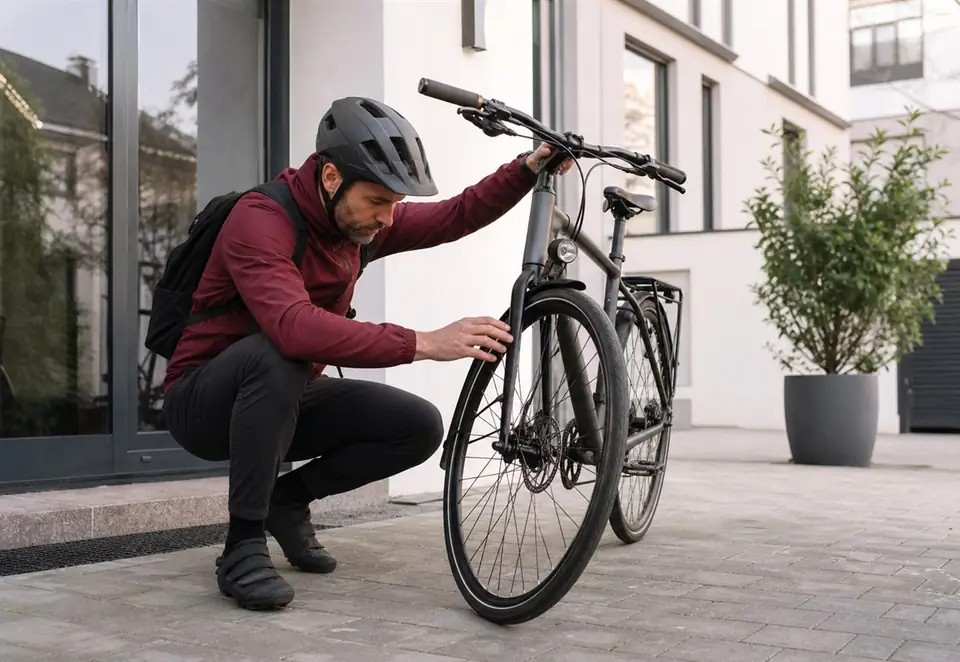
A buyer's inspection that helps separate an honest used bike from an expensive repair project.

A two-minute check that catches meaningful changes before you roll away.