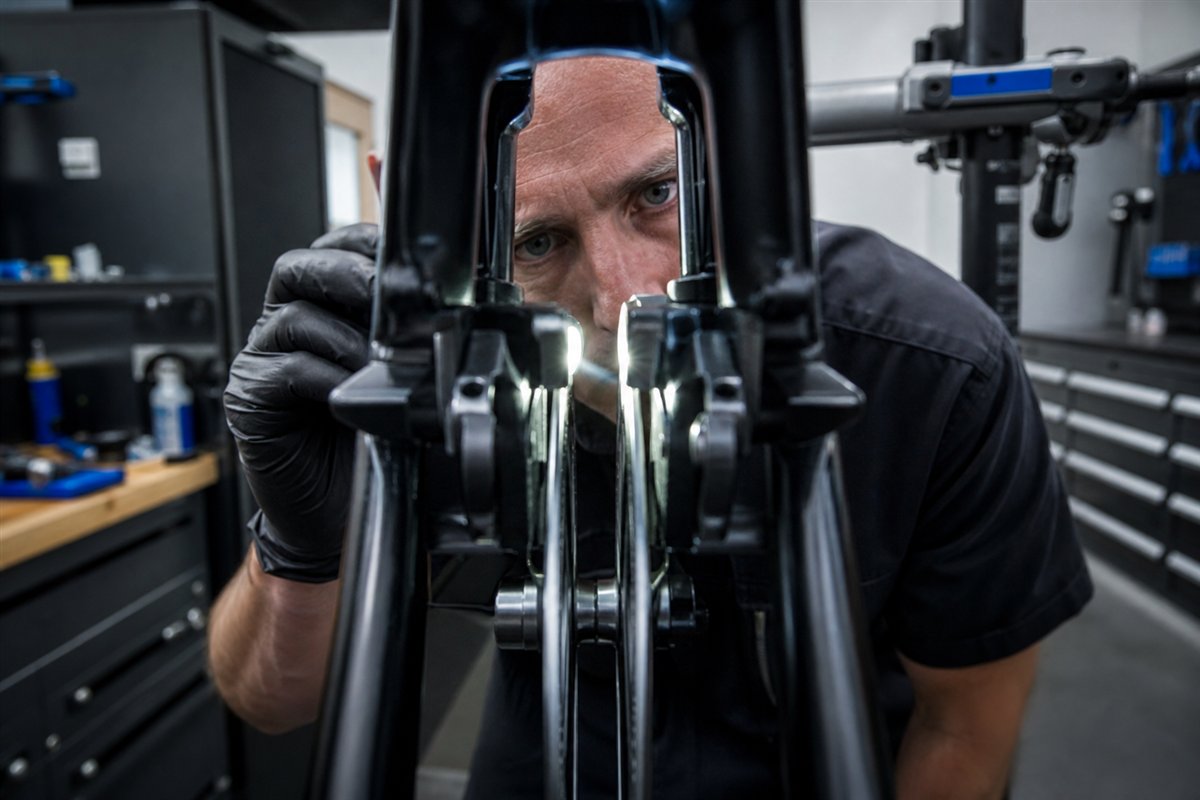
Disc brake rubbing often comes from a wheel that is not seated consistently, slight caliper misalignment, a bent rotor, heat expansion, or a piston that is not retracting evenly. Stop riding if the brake drags heavily, braking power changes, or the rotor is cracked or badly distorted.
Confirm where contact occurs
Lift the wheel only if you can support the bicycle safely. Spin it slowly and look through the caliper. A repeating contact once per revolution suggests rotor variation; continuous contact can point to alignment or piston clearance.
Check the basics
Confirm that the axle is secure according to the bicycle maker’s instructions and that the wheel sits correctly. Do not touch the rotor braking surface. Look for obvious rotor damage, a loose caliper, fluid around a hydraulic brake, or a cable that does not move freely.
Avoid improvised fixes
Do not bend a rotor by hand, spread hydraulic pistons with an unsuitable tool, or loosen mounting bolts unless you understand the brake maker’s alignment process and torque requirements. Incorrect work can reduce braking performance.
A brief light rub after hard braking may disappear as components cool. Persistent rubbing, heat, or resistance needs service. Pair this guide with the brake inspection checklist and brake pad wear signs.
Continue the topic
More brake care guides
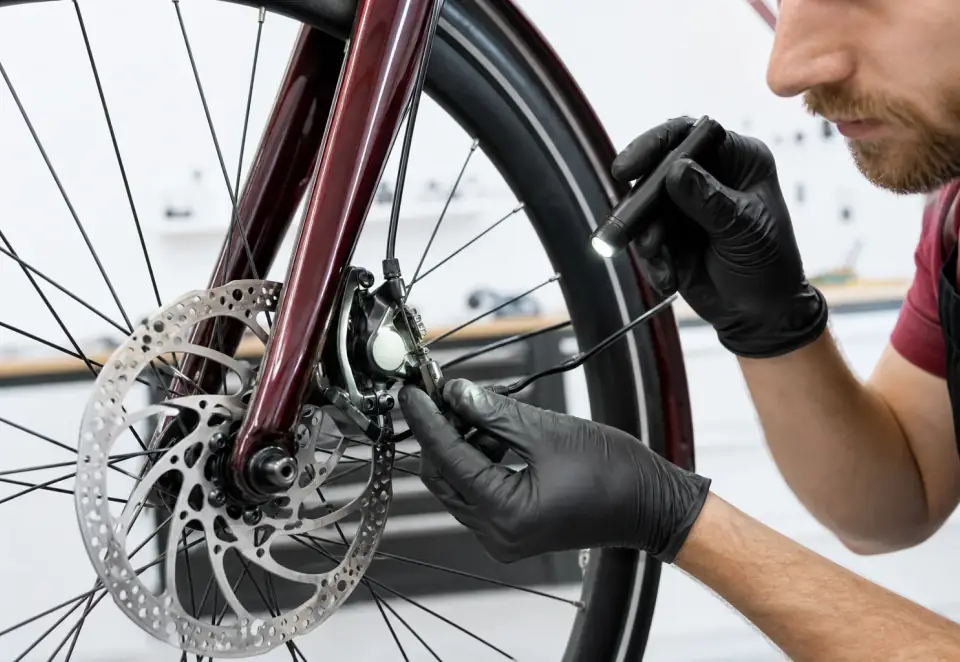 Can I Ride With Worn Bike Brake Pads?
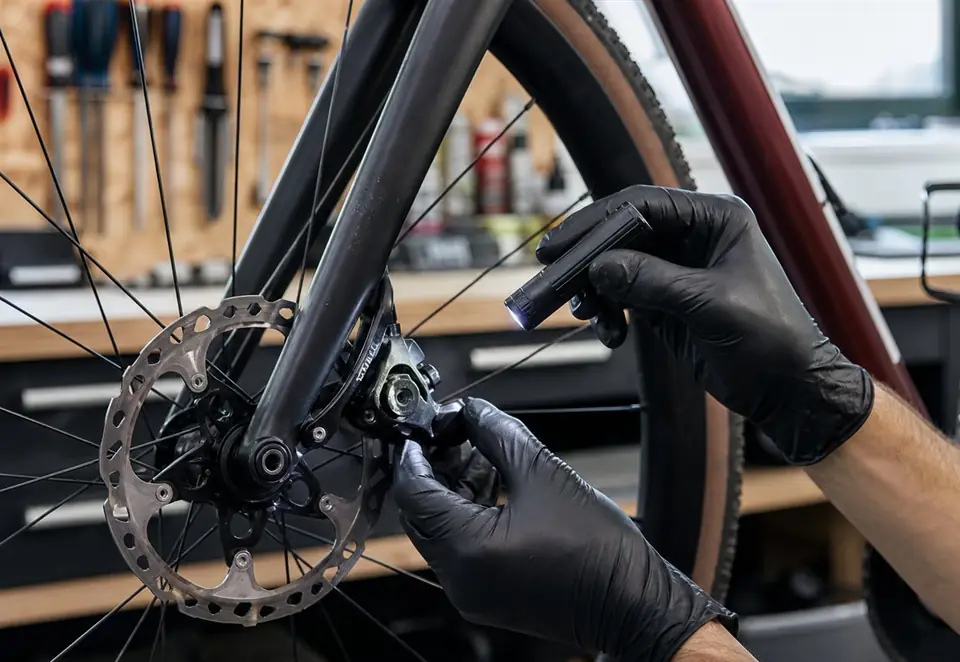 Bike Brake Inspection: A Safety-First Checklist
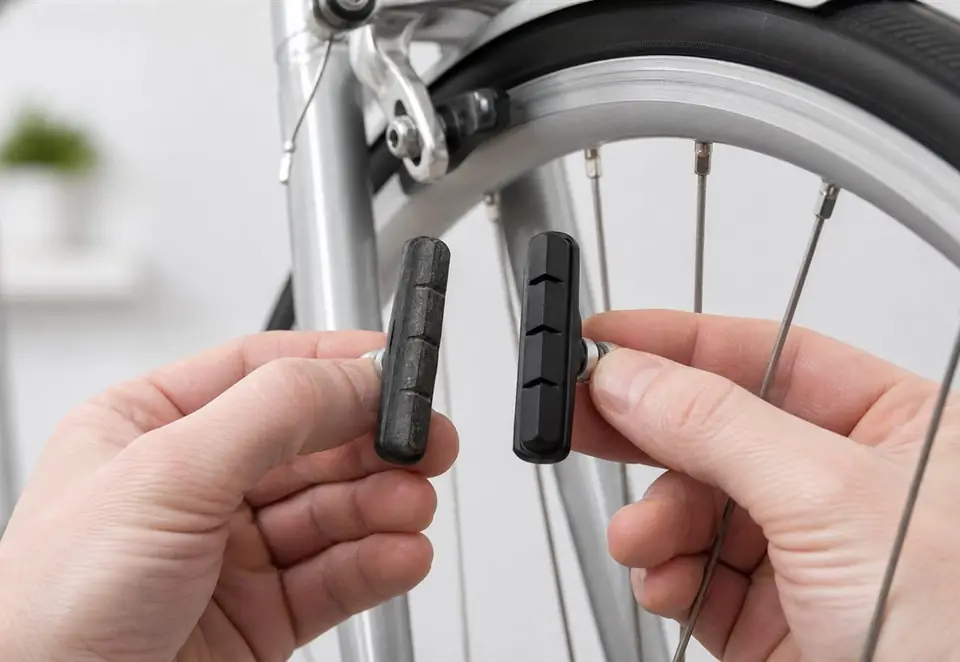 Bike Brake Pad Wear Signs You Should Not Ignore
Watch the technique
How to True a Bicycle Disc Brake Rotor
Video by Park Tool · Watch on YouTube