Where to start
Test each brake separately while walking the bike. The lever should move smoothly, the wheel should stop predictably, and no hose, cable, caliper, rotor, or rim should appear loose or damaged.
5 focused guides
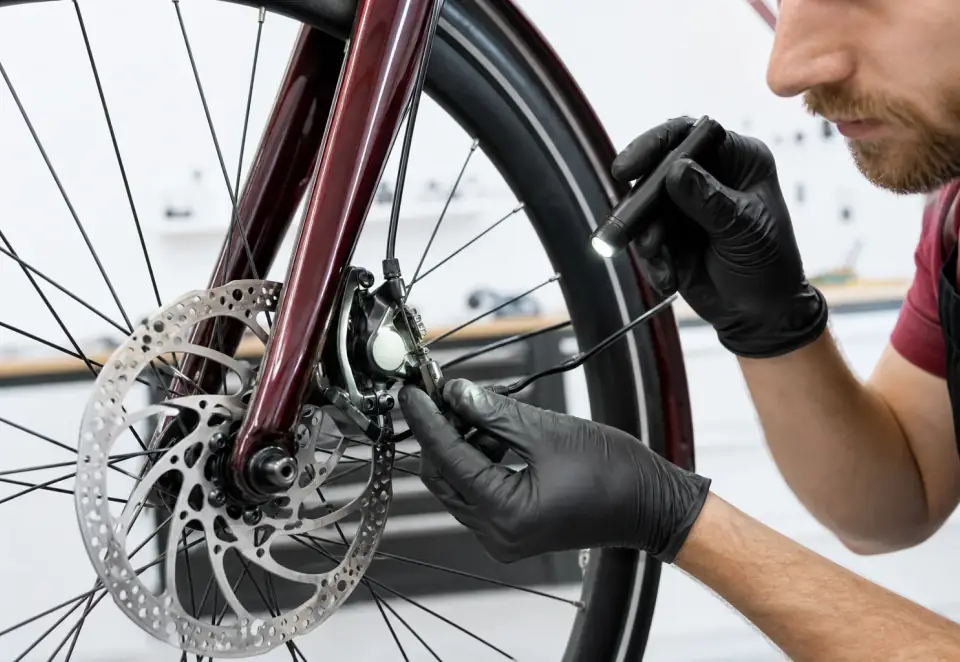
Brake problems deserve a conservative response because stopping performance can change quickly. Inspect lever feel, pad material, braking surfaces, cables or hoses, and wheel security as one system.
Test each brake separately while walking the bike. The lever should move smoothly, the wheel should stop predictably, and no hose, cable, caliper, rotor, or rim should appear loose or damaged.
Do not ride when a lever reaches the handlebar, braking force is weak or inconsistent, fluid is visible, a cable is frayed, a rotor is cracked, or pad material is exhausted. Contaminated braking parts often require replacement rather than aggressive cleaning.
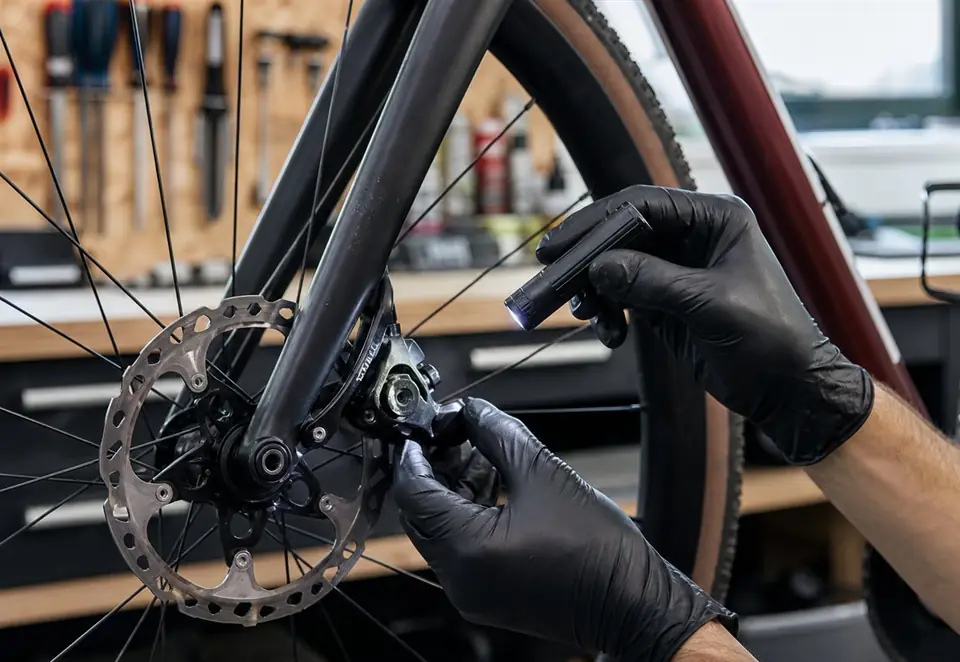
A safe brake check that separates visible inspection from adjustments requiring proper tools and expertise.
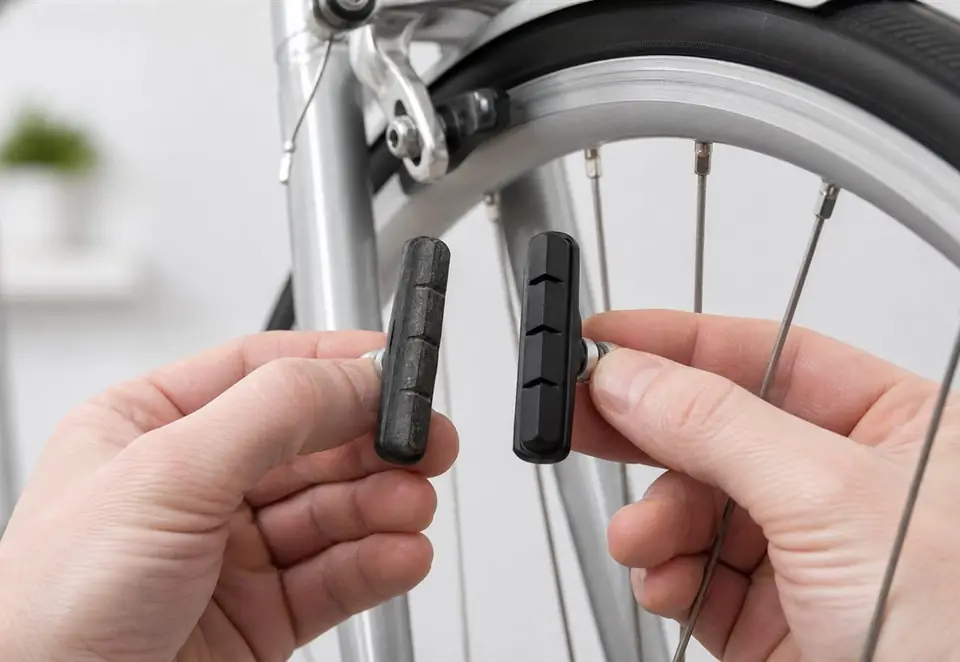
Visible and performance-related signs that brake pads need inspection or replacement.
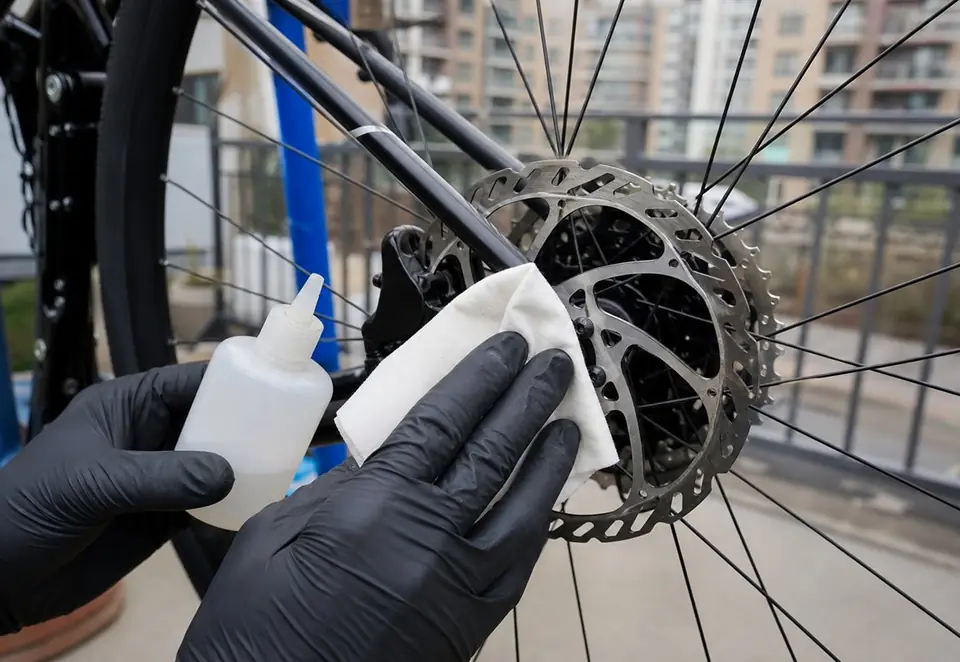
A practical way to separate harmless wet-weather noise from contamination, wear, or an alignment problem.
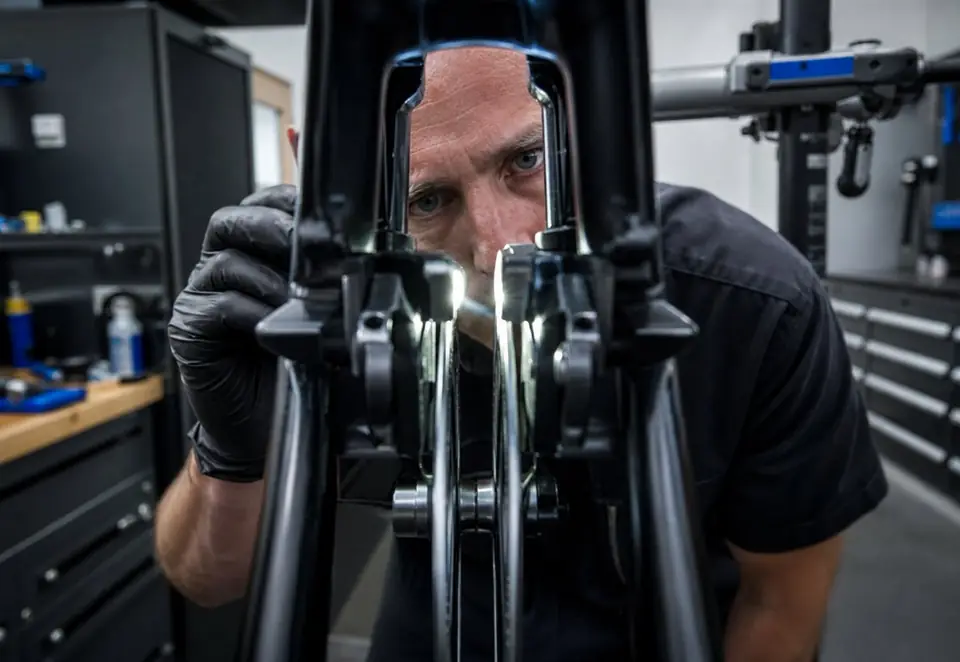
A safe sequence for identifying light rotor contact without making brake alignment worse.
Why a short final ride is not worth the risk when pad condition or braking performance is uncertain.