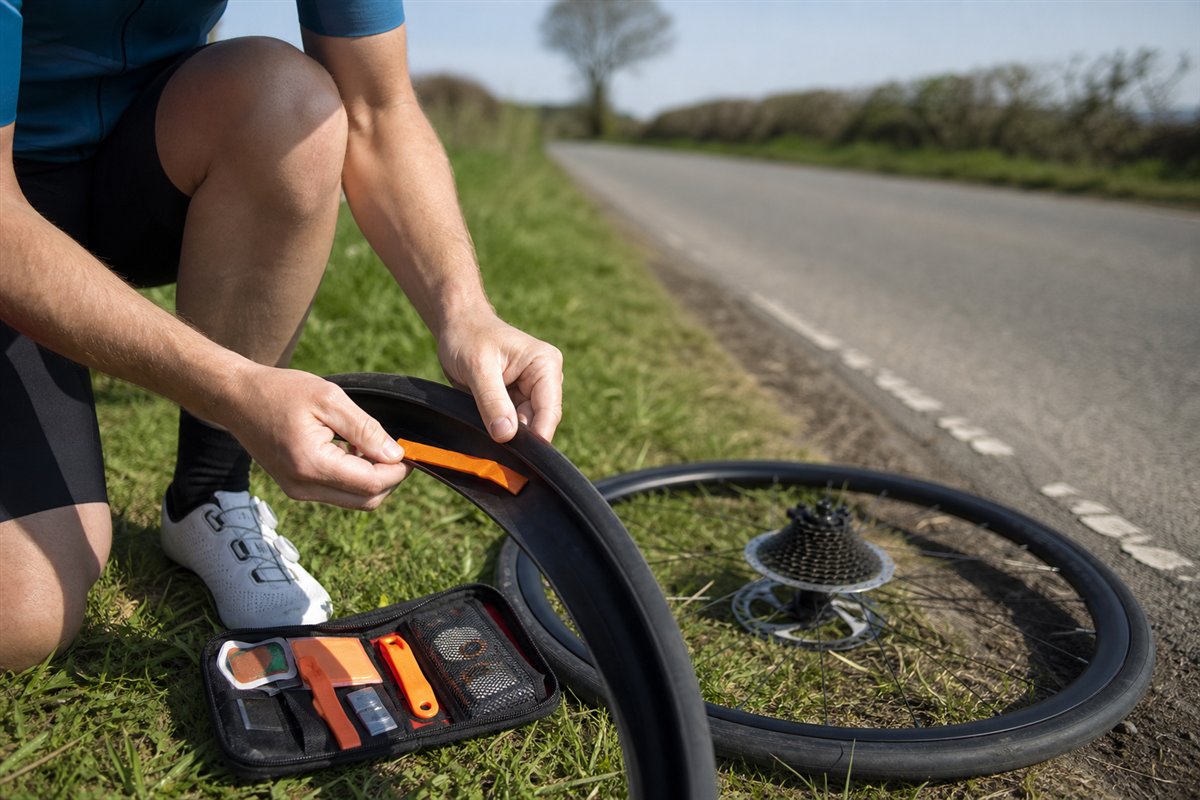
Do not ride a tire cut that exposes fabric casing, opens as pressure increases, damages the bead, creates a bulge, or prevents reliable inflation. A shallow cut limited to tread rubber may be cosmetic, but you cannot confirm casing condition from depth alone while the tire is inflated.
Deflate before close inspection
Keep weight off the bike and release pressure slowly. Check both inside and outside the tire if you have the knowledge and tools to remove it. Look for separated casing threads, a damaged bead, tube protrusion, or rim damage from the same impact.
Sidewall cuts deserve extra caution
Sidewalls flex continuously and have less protective tread rubber. A cut that reaches casing material, changes tire shape, or grows during inflation requires replacement.
A boot is not a structural repair
A tire boot may be an emergency method for a limited minor cut when its maker allows it, but it does not restore a failed casing and is not a permanent solution. When uncertain, keep the bicycle parked and ask a mechanic. See tire bulges and replacement signs.
Continue the topic
More tire care guides
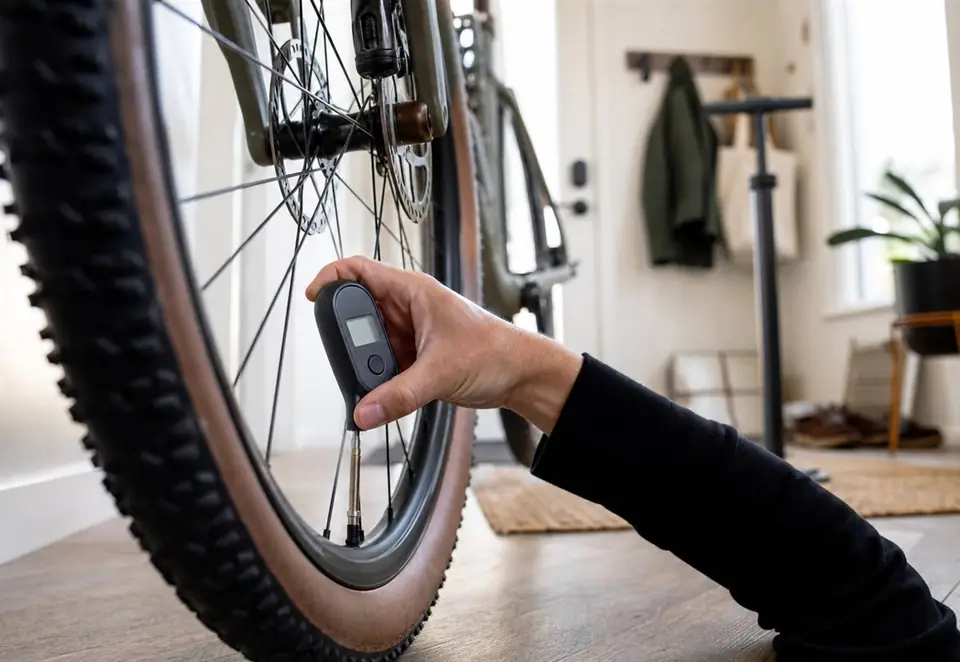 Bike Tire Inspection: Tread, Sidewall, Bead, and PressureBike Tire Pressure: How to Find Your Ideal PSI
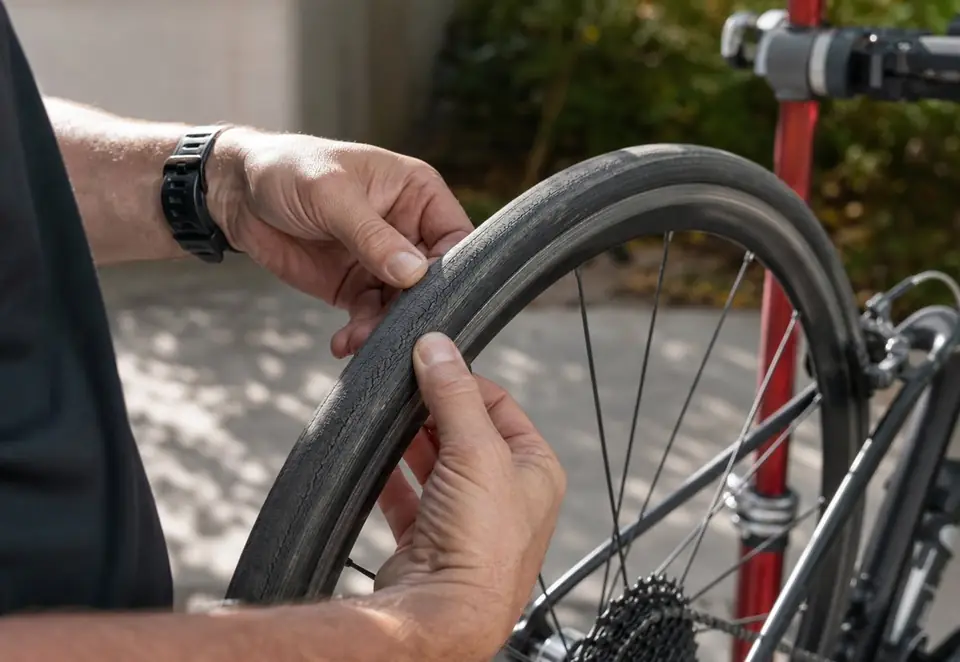 Bike Tire Sidewall Cracks: When They Are Unsafe
Watch the technique
When Should You Replace Your Bike's Tyres?
Video by GCN Tech · Watch on YouTube